Malaysia Enforces Social Media Ban for Children Under 16
Malaysia has begun enforcing new rules barring children under 16 from owning social media accounts, requiring platforms to implement age verification and safety measures.
 SociapaHQ
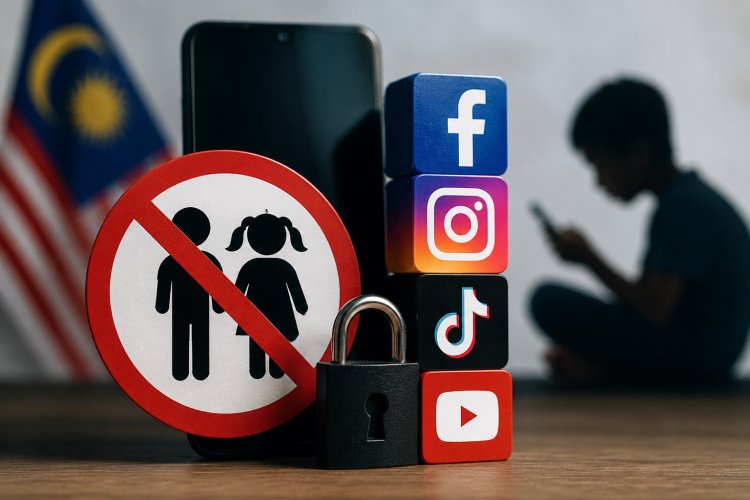
Malaysia began enforcing new rules Monday to ban children under the age of 16 from having social media accounts, joining a growing list of countries looking to tighten online safety protections for young users.
Social media platforms with over 8 million users, like Facebook, Instagram, TikTok and YouTube, must install age-verification systems and stop users under 16 from opening accounts, according to the rules.
Failure to comply could incur a fine of up to 10 million ringgit (US$2.5 million). But parents whose children find a way around the restrictions will not be penalised, according to a news report by NDTV.
Also Read: Puma, Zomato, Myntra Among Brands Reacting To RCB’s IPL Title Win
Child Safety Measures:
The Malaysian government said the measures are intended to protect children from harmful content, cyberbullying and platform features that encourage excessive use. The Communications and Multimedia Commission stressed the rules are not intended to block children from using the internet or digital technology, but to ensure service providers put in place age-appropriate safeguards and deal with online harms.
“These measures help to reinforce the protection of children in the online environment, at the same time giving extra reassurance to parents in navigating increasingly complex digital risks,” the regulator said in a statement released last month.
The new regime will require platforms to introduce safety-by-design features, including protections against manipulative design practices that encourage compulsive use. They are also required to act against underage accounts and harmful content.
Also Read: Licious Says ‘Mother of All Momos’ Campaign Reached 18.54 Million Consumers
Global Debate Continues:
The regulator said social media firms will be given a grace period to complete the implementation of age-verification systems. Tech companies have not yet detailed how they intend to meet the new requirements.
The Malaysian move follows similar attempts in a number of countries. Australia, Brazil and Indonesia have implemented or announced age-based restrictions or requirements on children's access to social media. Britain, France, Spain, Denmark, Thailand and South Korea are considering or designing similar moves.
Some tech companies have pushed back against the policy. In April, Meta’s Director of Public Policy for Southeast Asia, Clara Koh, warned that a blanket ban for users under 16 could send teenagers to the unregulated parts of the internet and away from supervised platforms. “teen accounts” for users under 18 that limits contact, screen time and exposure to inappropriate content, she said.
The restrictions are being introduced amid growing concern globally about the impact of social media on children’s mental health and safety online. In March, a U.S. jury ordered Meta and YouTube to pay millions of dollars in damages in a case claiming platform design features contributed to harm suffered by a young user.
The new rules in Malaysia have raised concerns about data privacy, but many parents support the new rules. “The need for government identification in age verification is ringing alarm bells,” said Benjamin Loh, a lecturer in social sciences at Monash University in Malaysia.
But Loh said experience in other countries has not yet shown that age-based restrictions are consistently effective. Families could potentially circumvent the rules by establishing accounts for their children without penalties for parents, he said.