Canada’s Under-16 Social Media Proposal Adds Momentum to Global Push for Youth Online Restrictions
Canada has proposed restricting social media access for users under 16, joining a growing list of countries introducing stricter rules aimed at protecting children online.
 SociapaHQ
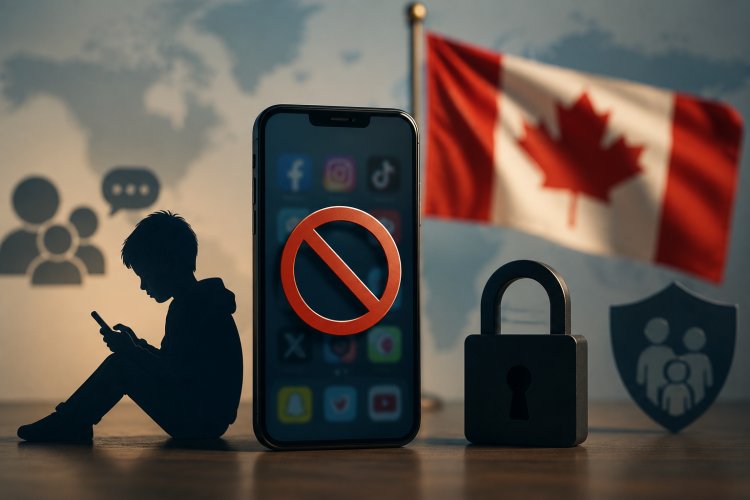
Canada has added itself to the list of countries trying to limit children’s access to social media, with the introduction of legislation that would ban under 16s from having social media accounts unless platforms can prove their services are safe for young users.
The new legislation, introduced this week, would also create a new digital regulator and impose hefty penalties on companies that do not comply with the rules. The bill has not yet become law but it highlights a growing global trend of tighter regulation of children’s online activity.
The move follows growing concerns about the effect of social media on the mental health of young people, exposure to damaging content, cyber-bullying and the potentially addictive nature of platform algorithms.
Also Read: Instagram Expands ‘Your Algorithm’ Feature to Give Users More Control Over Feed Recommendations
Australia Sets the Precedent:
Much of the current global momentum can be traced back to Australia, which was the first country to implement a nationwide ban on social media for children under 16.
The law, which is effective in December 2025, says major platforms like Instagram, TikTok, Facebook, Snapchat, Reddit and X must stop users under the age threshold from creating or retaining accounts. Companies that breach the restrictions risk fines of up to A$49.5 million.
Australia’s decision turned what had mostly been a policy discussion into a real regulatory example, and governments everywhere began to consider similar actions.
Asian Markets Tighten Controls:
Across Asia, governments are taking different approaches to keep young people safe online.
Indonesia becomes first Southeast Asian country to enforce social media ban for children under 16 Malaysia has followed suit, banning the registration of new social media accounts for users under 16 years old, starting in June 2026.
Instead, China chose a more subtle approach, introducing a “minor mode” system with device controls, app restrictions and age-appropriate screen-time limits.
The debate has become more visible, but India has not suggested a national restriction. Earlier this year, chief economic adviser V. Anantha Nageswaran described social media platforms as “predatory” and suggested controls based on age, while Goa has said it is considering policy options along the lines of Australia’s approach.
Also Read: Meta Faces Privacy Questions Over Hidden Facial-Recognition System
Europe Considers Age Limits:
Several European countries will also face tougher age requirements.
France’s National Assembly has approved a bill to limit children under 15 from using social media, while Denmark is considering a similar age limit with few exceptions for parents. Governments in Greece, Poland and Slovenia are considering similar steps.
Spain has proposed a minimum age of 16 and mandatory age-verification systems, and Norway and Sweden are contemplating legislation that would set the minimum age for social media access at 15.
Germany and Italy already require parents’ consent for younger teens to be on social platforms.
UK and US Pursue Different Paths:
The UK has not banned it but has focused on improving safeguards for online safety. The measures being contemplated by Prime Minister Keir Starmer’s government would require technology companies to prevent children from communicating explicit material on digital devices.
In the United States, the issue still is mostly a state level problem. While there is no federal ban on minors using social media, several states have passed laws that require parental consent for younger users, although many of these laws have been challenged in court on free speech and constitutional grounds.