Swiggy Instamart Announces Calvin Klein Arrival with Bold OOH That Blends Fashion Drops and Quick Commerce
Swiggy Instamart’s bold OOH campaign announces Calvin Klein’s arrival by blending high-fashion drop culture with the speed of quick commerce.
 Sandhya
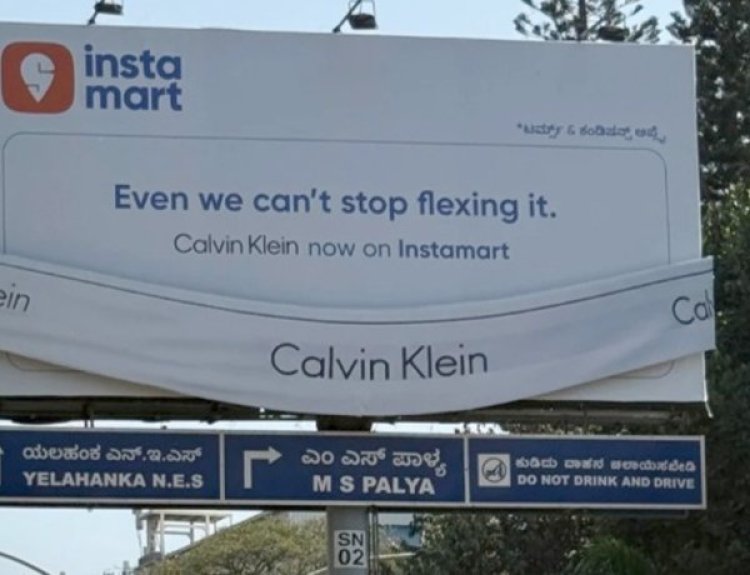
Swiggy Instamart has unveiled a bold and witty out-of-home (OOH) campaign announcing the arrival of Calvin Klein on its platform, signalling a decisive move beyond groceries and daily essentials. The campaign smartly blends the visual codes of high fashion with the speed-first promise of quick commerce, creating an execution that feels surprising, premium, and culturally tuned in.
At first glance, the billboard looks more like a luxury fashion ad than a quick-commerce announcement. The creative borrows heavily from the minimalist, high-contrast aesthetic long associated with premium fashion photography. Clean typography, stark colour palettes, confident negative space, and an uncluttered layout give the campaign a polished, aspirational feel. This visual restraint is deliberate—it allows the message to breathe and immediately sets the tone that this is not just another brand addition, but a statement.
What grounds the campaign firmly in Instamart’s world is the clever localisation of the visual language. The globally recognisable “CK” branding is juxtaposed with Instamart’s familiar delivery cues, instantly reframing Calvin Klein innerwear as something that can arrive at your doorstep in minutes. This contrast is where the idea truly lands. Luxury, which is traditionally associated with waiting, exclusivity, and planned purchases, is reimagined as impulsive, convenient, and on-demand.
At the heart of the campaign lies fashion’s obsession with “drop culture.” In the fashion world, drops are moments of hype—limited releases, countdowns, queues, and scarcity-driven excitement. Instamart flips this idea on its head. Instead of anticipation and delays, the campaign suggests immediacy. The “drop” doesn’t require waiting in line or refreshing a website; it simply requires placing an order. In doing so, Instamart translates a culturally loaded fashion concept into the language of quick commerce.
This reframing subtly shifts how Calvin Klein is positioned in the consumer’s mind. Rather than being seen solely as a premium fashion label reserved for planned shopping trips or special occasions, the brand is presented as an everyday essential—on par with staples like milk, bread, or toiletries. The implication is powerful: comfort, confidence, and personal style are not luxuries that need to be postponed. They are needs that can be fulfilled instantly.
Beyond announcing a brand partnership, the campaign also challenges long-standing category norms. It raises an almost provocative question—why should luxury take time? By placing high-fashion messaging within a quick-commerce context, Instamart blurs the line between aspiration and accessibility. The result is a narrative where premium no longer feels distant or intimidating, but integrated into daily life.
This OOH execution also reflects the broader evolution of Swiggy Instamart’s business strategy. Originally known for kitchen essentials and household items, the platform is steadily expanding into lifestyle and personal-care categories. Bringing a global fashion brand like Calvin Klein into the fold signals confidence in this shift. Importantly, Instamart manages this expansion without diluting its core identity. The tone remains playful, self-aware, and rooted in speed—qualities that users already associate with the brand.
In an OOH landscape often crowded with loud visuals and over-explained messaging, this campaign stands out by doing the opposite. It is visually restrained, conceptually clear, and instantly legible. You understand the idea in seconds: high fashion, delivered at quick-commerce speed. By merging fashion drop culture with ten-minute delivery, Instamart doesn’t just launch a new category—it sparks a conversation about how convenience, culture, and lifestyle are increasingly converging in the modern consumer’s world.