Government puts ₹250 crore into AVGC push, aims to build global content hub
India is investing ₹250 crore in AVGC labs across schools and colleges to build a global content creation ecosystem. Here’s what it means for media and brands.
 SociapaHQ
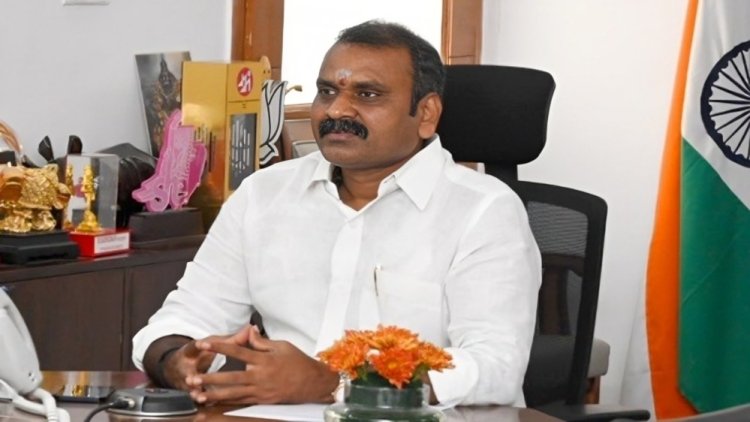
The government is stepping up its efforts to position India as a serious global player in content creation, with a sharper focus now on building talent pipelines and infrastructure for the AVGC sector. Animation, visual effects, gaming and comics have been on the policy radar for a while, but the latest move signals a more structured and scaled approach.
In the Union Budget 2026–27, ₹250 crore has been allocated to set up AVGC Content Creator Labs across 15,000 secondary schools and 500 colleges. The idea is straightforward. Start early. Bring hands-on creative and technical training into classrooms instead of leaving skill-building to fragmented private courses later on.
The execution will be led by Indian Institute of Creative Technologies in Mumbai, which has been designated as the nodal agency. Operating out of the IICT–National Film Development Corporation campus since July 2025, the institute is already running pilot programmes. It currently offers 18 courses with over 130 students enrolled, along with a Train-the-Trainer initiative aimed at preparing faculty. That part is critical, because scaling labs across thousands of institutions will depend as much on teachers as on technology.
This push builds on the roadmap laid out by the AVGC Promotion Task Force, set up in 2022. The projections are telling. India’s AVGC-XR ecosystem could need close to two million skilled professionals by 2030. That demand spans content production, design, programming and extended reality. Without a structured pipeline, the gap between industry demand and available talent would only widen.
Alongside skilling, there is a parallel focus on global exposure and market access. The World Audio Visual and Entertainment Summit 2025, held in Mumbai, brought together creators, studios, startups and investors from over 100 countries. Framed under the “Create in India, Create for the World” initiative, the event positioned India not just as a backend service provider, but as a source of original IP.
To support this shift, the WaveX Startup Accelerator Programme has been introduced to back media-tech startups. The programme offers mentorship, investor access and support in building intellectual property, while also opening doors to international platforms. For early-stage companies, that kind of access can make the difference between staying local and scaling globally.
Talent discovery is also being widened through the Create in India Challenge. Its first edition saw over one lakh participants across 33 industry-led challenges, including creators from Tier II and Tier III markets. Selected participants are being funnelled into platforms like WaveX and WAVES Bazaar, giving them visibility and potential commercial pathways.
Put together, the approach is clearly multi-layered. Education, startup support, industry collaboration and global outreach are all being pushed in parallel. The government is framing this as part of the broader “orange economy,” where creative industries are seen as both cultural exports and economic drivers.
For brands and media companies, this matters because it expands the talent pool and potentially lowers production bottlenecks over time. More creators, better trained, means more diverse content and formats. For consumers, especially younger audiences, it could translate into more locally rooted stories with global production quality.
There is still a long road ahead. Execution at this scale will depend on consistency across states, quality of training, and how closely industry stays involved. But the intent is clear. Move from scattered efforts to a system. And in the process, try to make India not just a participant, but a producer in the global content economy.