Rusk Media bets big on IP-led storytelling as brands chase deeper engagement
Rusk Media is expanding its IP-led content strategy as brands shift from ad spots to storytelling. Here is what it means for advertisers and digital media.
 SociapaHQ
As brands continue to move away from traditional ad formats, content companies are reworking how IPs are built and monetised. Rusk Media is leaning into this shift, focusing on multi-platform storytelling where brands are part of the narrative, not separate from it.
The push is visible with the second season of Battleground, set to stream on Amazon MX Player, where the company is looking to scale the IP and bring in a wider mix of partners. At the same time, returning shows like School Friends and continued investor backing point to a longer-term play around building repeatable, monetisable content properties.
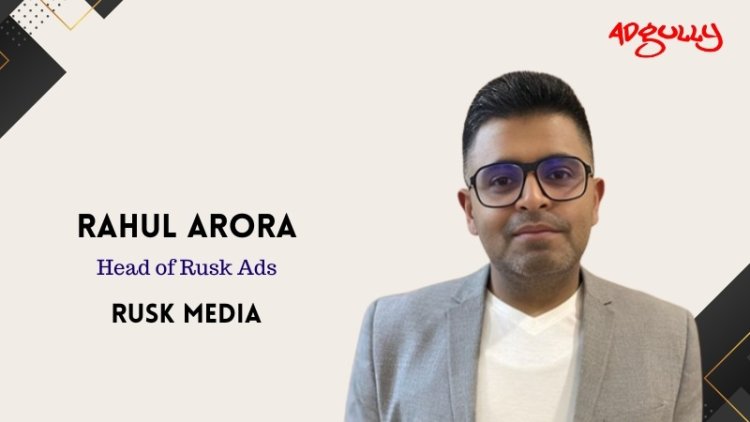
According to Rahul Arora, Head of Rusk Ads, the biggest shift in advertiser expectations today is around “relevant reach and attention.” With audiences now consuming content on individual mobile screens rather than shared ones, capturing attention has become more complex and more expensive.
Rusk’s response has been to move beyond standalone ad spots. Instead, it is building multiple entry points for brands across formats. “We don’t stop at long-form episodes; we extend the brand story into YouTube Shorts, Instagram Reels, influencer collaborations, and even gamified experiences,” Arora says. The idea is simple. Reach the same consumer across moments, not just once.
This approach is closely tied to the company’s IP-first model. Rusk is expanding its content slate across genres and audience segments, from Gen Z-focused titles like Playground and School Friends to shows like Bharat Ke Super Founders and Perfect Parents, which target a more mature viewer base. The monetisation strategy mirrors this spread, covering long-form integrations, creator-led extensions, and on-ground activations.
What is changing, though, is how brands show up within these formats. Arora describes the shift as one from “interruption to participation.” Instead of appearing as sponsors, brands are being written into the story itself. In Bharat Ke Super Founders, for instance, Jana Bank was positioned as a partner enabling entrepreneurial journeys, rather than just a visible logo.
This becomes critical at a time when audiences are increasingly sensitive to forced placements. Arora points to what he calls a “brand plug detector.” Passive visibility is easy to ignore. What works better is functional integration, where the product has a role in the story. Integrations like Livspace in Perfect Parents or OnePlus in Bharat Ke Super Founders are designed to feel like part of the narrative, not an add-on.
The same thinking applies to newer formats. In Battleground, brand presence is built around utility and context. In its first season, Charged by Thums Up was integrated into the challenges as an energy driver, while Honda Motorcycles aligned with performance-led moments. The upcoming season is expected to build on that, with new partners like DaMENSCH, Performax, and Paragon, alongside returning brands.
At a broader level, the rise of creator-led ecosystems is also reshaping how brands approach advertising. The shift is from broadcast messaging to community participation. Instead of one large campaign, brands are now part of multiple smaller conversations happening across platforms and creators.
One area that remains underutilised, according to Arora, is interactive and gamified content. While experimentation has started, adoption is still limited. That leaves room for brands to explore formats that go beyond passive viewing and into active participation.
For brands, the shift means rethinking how success is measured. Visibility alone is no longer enough. Engagement and relevance are becoming more important, especially among younger audiences who expect brands to add value within content.
For media companies, it puts pressure on building IPs that can travel across platforms and sustain long-term partnerships. And for consumers, it changes the viewing experience. Fewer interruptions. More integration. Sometimes subtle, sometimes obvious, but increasingly part of the story itself.