OpenAI Builds Ads Safety Team for ChatGPT Push
OpenAI is forming an ads integrity team as it prepares to test advertising in ChatGPT, focusing on advertiser verification, brand safety and user trust.
 Sandhya
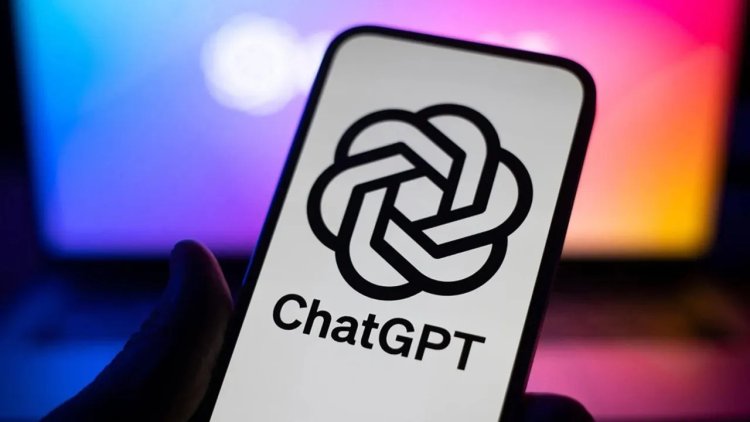
OpenAI is laying the groundwork for advertising inside ChatGPT by forming a dedicated integrity unit, signalling that monetisation and trust mechanisms are being developed in parallel.
According to a report by Business Insider, the company has begun hiring for an engineering role within a newly created “ads integrity” team. The position is described as high impact and central to building the infrastructure that would allow OpenAI to scale an advertising business while protecting user confidence in responses generated by the chatbot.
The move places OpenAI in familiar territory for large digital platforms. Businesses that rely on advertising revenue typically invest early in verification, fraud prevention and brand suitability frameworks. Without those systems, growth can quickly collide with reputational risk.
For OpenAI, the stakes may be even higher. Unlike social feeds or video platforms, ChatGPT is positioned as a productivity and knowledge tool. Any perception that commercial interests distort outputs could undermine adoption, particularly among enterprise users.
The job listing suggests the integrity team will create tools and operational processes to ensure that the expansion of advertising does not interfere with reliability. That includes building mechanisms to evaluate who is allowed to advertise and under what conditions.
A central component will be advertiser verification, often referred to as “know your customer” or KYC. These systems are used widely across the industry to confirm identities, detect suspicious behaviour and limit abuse. Scam promotions and misleading offers have been persistent challenges for self-serve ecosystems, forcing companies to strengthen screening protocols.
By announcing such hiring activity early, OpenAI appears intent on demonstrating that governance will evolve alongside monetisation, not after problems surface.
An OpenAI spokesperson confirmed that advertising tests are expected to begin in the United States in the coming weeks. The pilot will run on ChatGPT’s free tier as well as its Go subscription plan. Entry into the initial programme will require a minimum commitment of $200,000, a threshold that effectively narrows participation to larger advertisers during the trial phase.
Measurement in the early stages will remain straightforward. The company plans to track clicks and impressions while it experiments with broader attribution and performance frameworks over time.
For marketers, the development opens a new frontier. Conversational environments represent high-intent contexts, where users are already seeking information or solutions. If structured carefully, ad formats could feel like recommendations rather than interruptions. If handled poorly, they risk being viewed as contamination.
The balance between commercial opportunity and neutrality will therefore define whether advertisers and users embrace the model.
The formation of a specialised integrity team suggests OpenAI recognises that its differentiation lies not only in technical capability but also in perceived credibility. As competition in generative AI intensifies, trust may become one of the most defensible assets.
The coming months will reveal how the company integrates paid messaging into a product built on helpfulness. For now, the hiring push offers a preview of the operational scaffolding being assembled behind the scenes.