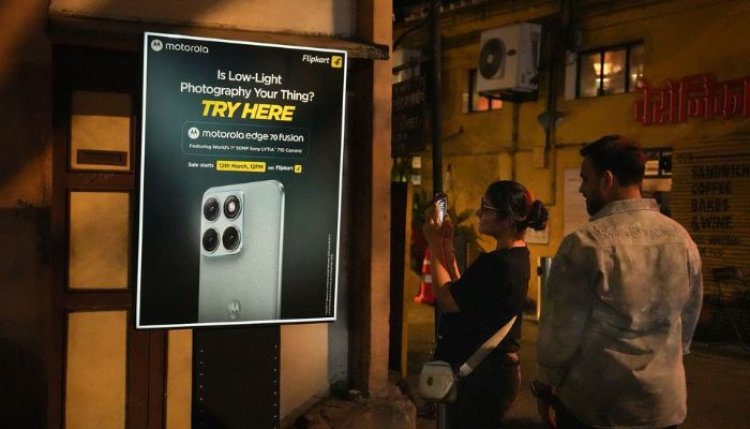
Instead of simply telling people about the phone’s camera capabilities, the company invited them to test it in real life. Through a creative outdoor activation, Flipkart transformed a traditional billboard into an interactive experiment that encouraged people to compare their own phone cameras with the Motorola Edge 70 Fusion.
At first glance, the billboard looked like a regular smartphone advertisement. It displayed a striking photograph shot using the Motorola Edge 70 Fusion along with a simple yet confident message. The line challenged passers by to see if their own phone cameras could capture the same scene just as well.
The real twist, however, was waiting right below the hoarding.
The exact scene shown on the billboard had been recreated physically on the street underneath it. This meant anyone walking past the installation could stop, take out their phone, and click the same picture displayed above them.
In a matter of seconds, people could compare their photograph with the image used in the advertisement. The concept turned the billboard into a live camera test where the audience themselves became the reviewers.
The campaign relied on a clever insight about smartphone users. Most people believe their device takes great photos until they see a direct comparison. By creating a real world side by side experience, Flipkart allowed consumers to evaluate camera performance in the most transparent way possible.
As pedestrians began interacting with the installation, the billboard quickly turned into a social experiment. People stopped to capture the recreated scene, compare their results, and discuss the difference with friends and strangers nearby. Some even turned the activity into short social media videos, recording reactions and encouraging others to participate.
The campaign soon found its way onto digital platforms as users shared their experiences online. Videos featuring passers by attempting the camera challenge started circulating on social media, giving the activation a life beyond its physical location.
This organic amplification was part of the campaign’s broader strategy. Instead of relying solely on paid advertising, the idea encouraged real engagement. When people personally interact with a campaign, they are more likely to talk about it, share it, and invite others to experience it.
The outdoor activation was also supported by additional creative elements across the city. Some installations were placed in dimly lit environments to highlight the smartphone’s low light photography capabilities. Others focused on capturing motion, demonstrating how the camera performs when subjects are moving quickly.
Together, these experiences created a multi layered campaign that showcased the phone’s photography features in different real world scenarios. Rather than presenting technical specifications or complicated camera jargon, the campaign translated performance into simple, everyday experiences that anyone could understand.
In many ways, the campaign reflects a larger shift in modern advertising. Consumers today are increasingly skeptical of bold marketing claims. Instead of polished promises, they respond better to demonstrations that allow them to judge for themselves.
Interactive experiences like this billboard activation help bridge the gap between product claims and consumer trust. By inviting people to test the product directly, brands create a sense of transparency and authenticity that traditional advertising often struggles to achieve.
For Flipkart, the campaign also reinforces its positioning as a platform that brings technology closer to consumers. By turning a simple billboard into an engaging experiment, the company managed to spark curiosity, encourage participation, and create a memorable brand moment.
In the end, the campaign did more than promote a smartphone camera. It transformed a static advertisement into a live experience where consumers themselves became the judges.
And in a world full of marketing promises, sometimes the most convincing message is simply this try it yourself.

 Sandhya