Amazon Ads Turns Ten As AI Promises Simpler Advertising
Amazon Ads completes decade in India, introducing AI tools to simplify campaign creation, management, and performance, aiming to reduce complexity for brands and marketers.
 Anupriya
Digital advertising was supposed to make marketing smarter. Instead, for many brands, it made things… complicated.
Too many dashboards. Too many formats. Too many decisions.
Now, as Amazon Ads completes ten years in India, it is making a bold promise: what if artificial intelligence could finally clean up the mess it helped create?
At its core, Amazon Ads’ tenth anniversary is not just a milestone. It is a pivot point.
Over the last decade, digital advertising has evolved from simple banner placements to a complex ecosystem spanning search, video, display, retail media, and beyond. Brands today are expected to manage entire consumer journeys, from awareness to purchase, often across multiple platforms and tools.
Precision increased.
So did confusion.
And that is exactly the problem Amazon is trying to solve.
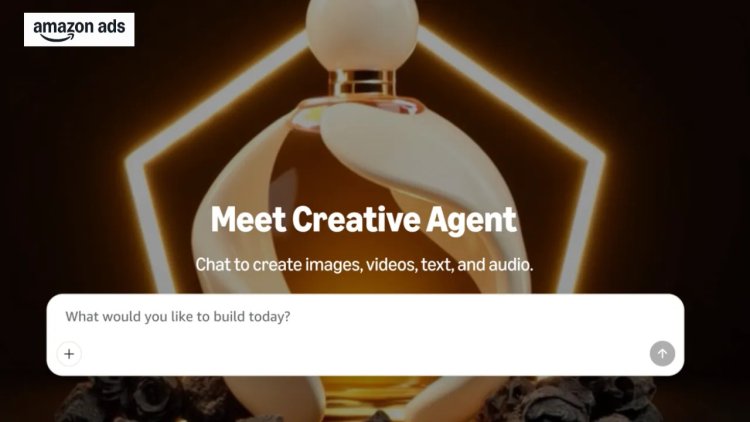
At its first flagship event in India, the company introduced a suite of AI-powered tools, including Creative Agent and Ads Agent, designed to automate and simplify large parts of the advertising process. The goal is not just better ads, but easier advertising.
Because for many businesses, especially smaller ones, the challenge is not ambition. It is bandwidth.
Creating ad creatives, selecting the right audience, optimising budgets, tracking performance, and making constant adjustments can quickly become overwhelming. Amazon’s AI tools aim to reduce this burden by handling much of the heavy lifting.
Think of it as shifting from control to guidance.
Instead of manually building every campaign element, advertisers can rely on AI to generate creatives, recommend strategies, and optimise performance in real time. The system learns from data, adapts to trends, and continuously refines campaigns without requiring constant human intervention.
In theory, this turns advertising from a task into a system.
And that changes how brands engage with it.
Amazon Ads has also evolved far beyond its original role as a retail media channel. What began as a way to promote products within an e-commerce platform has now grown into a full-funnel advertising solution, connecting discovery, consideration, and purchase within one ecosystem.
This integration is key.
Because one of the biggest challenges in modern advertising is fragmentation. Different platforms handle different stages of the consumer journey, often without seamless data flow between them. Amazon’s model attempts to bring these touchpoints together, allowing brands to track and influence the entire path to purchase more cohesively.
AI becomes the glue that holds it all together.
It connects insights across formats, predicts performance, and aligns campaigns with consumer behaviour, all while reducing the manual effort required from advertisers.
For brands, this could mean faster execution, better efficiency, and potentially higher returns on ad spend. For smaller businesses, it could level the playing field, giving them access to tools and insights that were once limited to larger advertisers with dedicated teams.
But the bigger question remains.
Can AI actually simplify advertising, or will it just make it more opaque?
Because while automation reduces effort, it can also reduce visibility. As systems become more intelligent, they also become harder to fully understand. For marketers used to control and transparency, this shift requires a leap of trust.
And that is where the industry stands today.
Balancing efficiency with clarity.
Automation with accountability.
Amazon’s bet is clear. Advertising does not need more tools. It needs fewer, smarter ones.
If AI can deliver on that promise, it could reshape how brands approach marketing altogether. Campaigns may become less about managing complexity and more about setting intent, letting systems handle execution.
But if it fails, the industry risks adding another layer of complexity to an already tangled system.
For now, as Amazon Ads turns ten, the message is optimistic.
Advertising might finally get simpler.
Or at least, that is the algorithm’s plan.