Sony Pictures Networks India Reinvents Game Shows to Bring Families Back to Appointment Viewing
SPNI sharpens its focus on interactive game shows and reality formats, aiming to unite families, boost co-viewing, and strengthen linear TV relevance across India.
 Sandhya
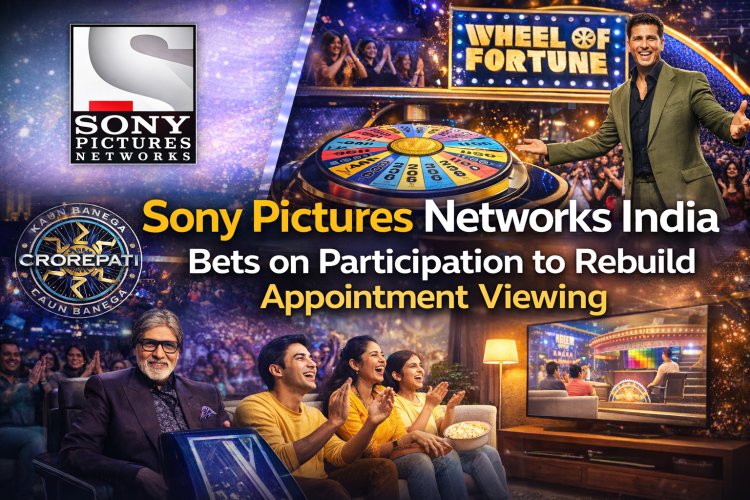
In an era where entertainment is increasingly consumed in isolation, Sony Pictures Networks India is doubling down on formats designed to bring viewers back together. The broadcaster is reshaping game shows and reality programming into participative, momentum-driven experiences that encourage families to gather in the living room rather than disperse across personal screens.
The strategy is rooted in a simple behavioural insight: audiences today are selective and gravitate toward content that offers immediacy, progression, and emotional payoff. Quiz and competition formats naturally provide these triggers. By weaving playability and aspiration into mainstream programming, the network aims to rebuild habitual, time-bound viewing.
A key pillar of this push is Wheel of Fortune, revived as a high-energy, family-friendly property hosted by Akshay Kumar. The format invites at-home participation and positions winning, guessing, and cheering as collective acts rather than passive consumption. The intent is not nostalgia, but renewal — taking a globally familiar template and aligning it with the expectations of contemporary Indian households.
The approach also mirrors the continuing strength of Kaun Banega Crorepati, which marked 25 years while still drawing significant traction among younger viewers. Its Play Along mechanic has helped extend engagement beyond the television set, allowing audiences in metros as well as Tier 2 and Tier 3 towns to feel directly involved in outcomes.
By combining interactivity with emotional storytelling, SPNI is reinforcing the case for linear television as a shared cultural space. Rather than competing with digital platforms on volume, the network is leaning into scale, simultaneity, and togetherness — advantages that remain difficult to replicate in fragmented environments.
The broader ambition is clear: transform watching into participating, and participation into routine. If successful, the move could help re-establish appointment viewing as a powerful currency for both audiences and advertisers.