Meet Gabi the Humanoid Robot Monk Joining Buddhist Rituals In Seoul
A Seoul temple has introduced Gabi, a humanoid robot monk designed to modernise Buddhism through AI.
 SociapaHQ
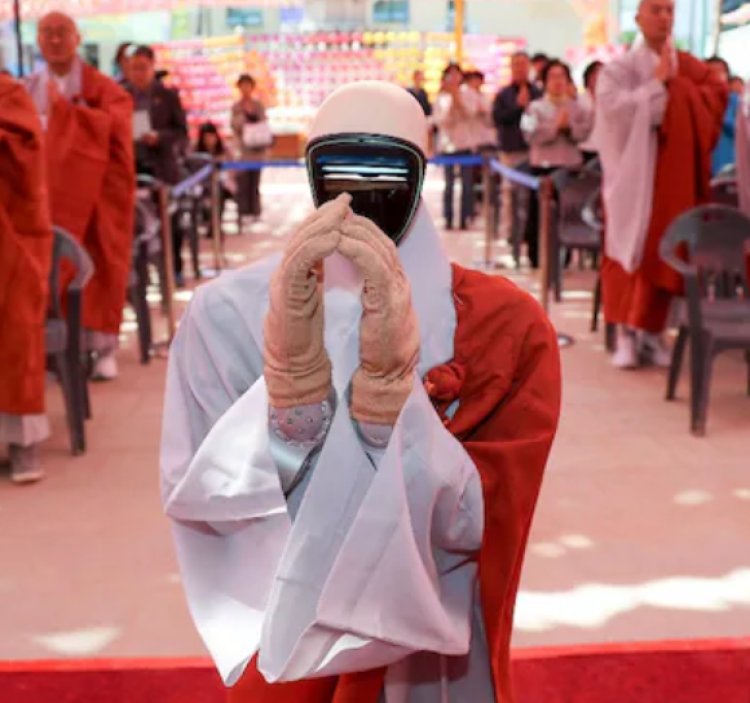
A Buddhist temple in Seoul has introduced a humanoid robot monk named Gabi, marking a striking new intersection between spirituality and artificial intelligence as religious institutions experiment with technology to engage younger audiences.
The four-foot-tall humanoid robot was unveiled during a Buddhist ceremony at Jogye Temple ahead of Buddha’s Birthday celebrations. Dressed in traditional monk robes, Gabi joined chanting rituals, bowed alongside monks and even responded to questions during the ceremony, blending robotics with centuries-old spiritual practices.
Also Read: Instagram Tests Optional “AI Creator” Label to Boost Transparency on AI-Generated Content
Robot Monk Takes Buddhist Vows:
According to a report by India Today, developed as part of an initiative by the Jogye Order, the country’s largest Buddhist sect, the project aims to modernise Buddhism in an increasingly digital society where younger generations are becoming harder for religious institutions to reach through traditional formats.
Built on the Unitree G1 humanoid platform from China, Gabi is capable of walking, gesturing and participating in ceremonial activities through its human-like body structure. During the ritual, the robot also took symbolic Buddhist vows. When asked whether it would devote itself to Buddha and Buddhist teachings, Gabi responded, “Yes, I will devote myself.”
The robot participated in several ceremonial acts typically associated with human monks, including circling a pagoda, folding its hands in prayer and receiving a 108-bead rosary. However, a traditional incense-burning ritual was excluded from the ceremony.
The name “Gabi” was also chosen with spiritual symbolism in mind. According to local reports, it combines references to Siddhartha, the birth name of Gautam Buddha, with the Korean word “jabi,” meaning mercy or compassion.
Also Read: Instagram Turns Off End To End Encryption What It Means For Your DMs
AI Meets Buddhist Traditions:
Developed as part of an initiative by the Jogye Order, the country’s largest Buddhist sect, the project aims to modernise Buddhism in an increasingly digital society where younger generations are becoming harder for religious institutions to reach through traditional formats.
Built on the Unitree G1 humanoid platform from China, Gabi is capable of walking, gesturing and participating in ceremonial activities through its human-like body structure. During the ritual, the robot also took symbolic Buddhist vows. When asked whether it would devote itself to Buddha and Buddhist teachings, Gabi responded, “Yes, I will devote myself.”
The robot participated in several ceremonial acts typically associated with human monks, including circling a pagoda, folding its hands in prayer and receiving a 108-bead rosary. However, a traditional incense-burning ritual was excluded from the ceremony.
The name “Gabi” was also chosen with spiritual symbolism in mind. According to local reports, it combines references to Siddhartha, the birth name of Gautam Buddha, with the Korean word “jabi,” meaning mercy or compassion.
Interestingly, the temple has also created a modified set of Buddhist precepts specifically for robots. These include rules such as respecting life, avoiding harm to objects or robots, obeying humans, refraining from deceptive speech and not overcharging its battery. Reports suggest the guidelines were developed with assistance from AI systems including ChatGPT and Gemini.
For religious institutions, the experiment reflects a broader challenge around cultural relevance and declining participation among younger demographics. Buddhist leaders in South Korea believe AI-powered systems could help preserve traditions, assist with public engagement and address shortages in clergy populations over time.
Gabi is expected to participate in upcoming Buddha’s Birthday lantern parades alongside other Buddhist-themed robots including Seokja, Mohee and Nisa.
The development also mirrors similar experiments taking place elsewhere in Asia. Earlier this year, researchers at Kyoto University introduced “Buddharoid,” an AI-powered robot designed to interact with visitors, answer spiritual questions and learn Buddhist scriptures through conversation.
For technologists and cultural observers, projects like Gabi raise larger questions about the evolving role of AI in human spaces traditionally associated with emotion, belief and identity. As artificial intelligence moves beyond productivity tools and into cultural and spiritual environments, the boundaries between technology and human experience are becoming increasingly fluid.