Royal Observatory Warns AI Could Reduce Human Intelligence
Royal Observatory Greenwich has warned that growing dependence on AI tools could weaken human curiosity, critical thinking and independent learning.
 SociapaHQ
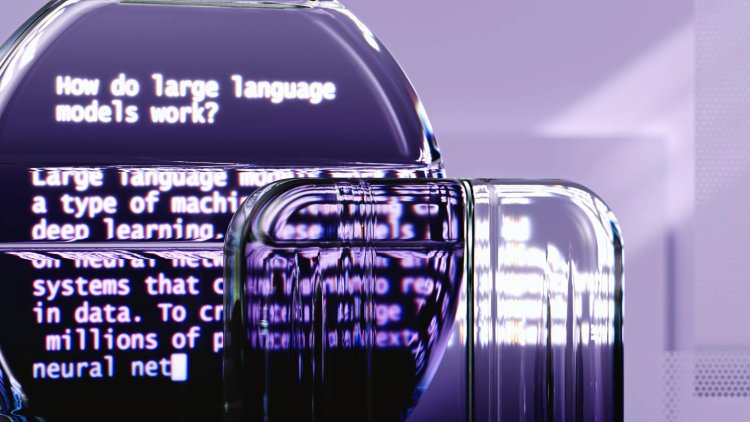
Royal Observatory Greenwich has warned that growing dependence on artificial intelligence tools capable of instantly answering questions and solving complex problems could weaken human intelligence, curiosity and critical thinking over time.
The Observatory, one of the United Kingdom’s oldest purpose-built scientific institutions, raised concerns about the long-term impact of relying too heavily on AI-generated responses instead of human inquiry and analysis, BBC reported.
Commenting on the issue, Paddy Rodgers, director of the Royal Museums Greenwich, said the institution’s long scientific history demonstrates the importance of human curiosity and independent questioning.
“A reliance solely on instant answers risks losing the habits of questioning and evaluation that underpin knowledge, expertise and innovation,” Rodgers said.
His comments come during the Observatory’s ongoing transformation project titled “First Light”, which aims to reinterpret centuries of astronomical discoveries and scientific passion for modern audiences.
Also Read: WHO Declares Ebola Outbreak In DR Congo A Global Health Emergency
Debate Over AI Dependence:
According to Rodgers, many of history’s most important scientific discoveries emerged not only through technological innovation but also through human experimentation, observation and the pursuit of unexpected results.
He suggested that AI systems may not always replicate the value of exploratory thinking or the accidental discoveries that often arise through manual research and long-term investigation.
Rodgers pointed to the work of early astronomers who spent decades collecting data about the heavens, much of which later became useful in ways they had never originally anticipated.
According to him, some of the information gathered through painstaking human effort later helped researchers understand broader scientific ideas related to navigation and Earth systems.
“The human beings did, and it ended up being a huge resource that could be used 150 years after they had written it up,” Rodgers said while discussing the long-term value of human-led research.
Also Read: Paytm Launches ‘Pocket Money’ Feature For Teenagers Using UPI
At the same time, Rodgers acknowledged that AI continues to play an increasingly important role in advancing scientific discovery.
In 2024, Demis Hassabis shared the Nobel Prize in Chemistry for work involving AI-driven protein structure prediction.
Hassabis, who leads Google DeepMind, helped develop the AlphaFold2 system capable of predicting the structures of nearly all known proteins.
Meanwhile, Reid Hoffman, co-founder of LinkedIn, has described AI as a major transformation in “cognitive excellence”.
The discussion reflects growing global debate over how AI tools may reshape human learning, creativity and problem-solving as the technology becomes more deeply integrated into everyday life and scientific research.