AI Is Changing Marketing Fast But Are We Losing Our Voice Along the Way
AI is transforming marketing, but is it replacing originality? A closer look at how automation is reshaping creativity, communication, and brand voice.
 SociapaHQ
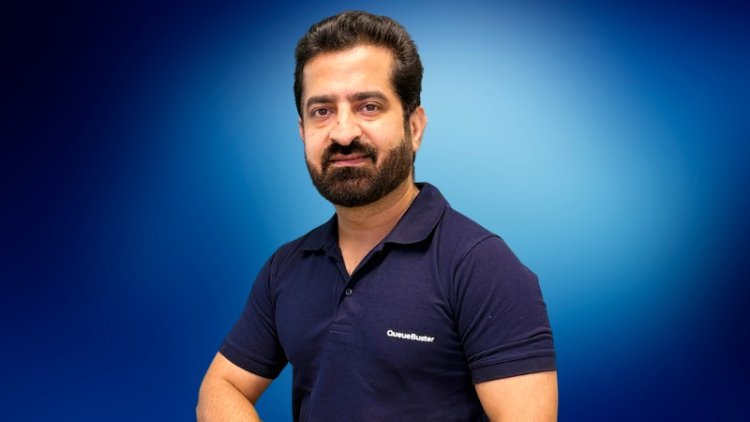
Artificial intelligence has quickly moved from being a helpful tool to becoming a daily habit for marketers. What started as a faster alternative to search engines is now deeply embedded in how content, campaigns, and communication are created. As Vineet Chugh, VP and Head of Marketing at QueueBuster POS, points out, AI is no longer occasional support, it is part of the workflow. From writing and research to presentations and lead generation, the dependency is visible and growing.
Initially, AI felt like efficiency. It reduced time spent on research, simplified complex data, and made execution faster. Marketers could move quicker, test more ideas, and operate with leaner teams. Tools like ChatGPT, Gemini, and others enabled faster outputs and improved productivity across functions. Lead generation also saw a shift, with AI helping qualify prospects and automate early outreach, improving both efficiency and ROI.
But as usage increased, the relationship changed. What began as assistance slowly started replacing the first step of thinking. Instead of starting with ideas, marketers now often start with prompts. The creative process, once messy and exploratory, is becoming more structured and immediate. Outputs are cleaner and faster, but often feel similar, lacking individuality and depth.
This shift is visible across platforms. Social media trends today move at speed, but they also look increasingly alike. A format emerges, and within hours, multiple brands replicate it with minor tweaks. The result is participation without differentiation. As Chugh notes, when everyone is using similar tools and prompts, the line between creativity and replication begins to blur.
The same pattern is visible in visual content. AI-generated creatives are technically sharp, but often lack the nuance of real production. The imperfections that once added authenticity to shoots are being replaced by polished but predictable visuals. For consumers, this can reduce emotional connection, even if the output looks perfect.
Communication has also evolved. Emails and LinkedIn posts are more polished than ever, but often feel uniform. The individuality of voice is fading as AI standardises tone and structure. While this improves clarity, it raises a larger question for brands and professionals alike: if everyone sounds the same, what truly stands out?
For brands and marketers, this moment is less about resisting AI and more about redefining its role. AI is no longer optional. It is a core part of modern marketing, enabling speed, scale, and efficiency. But its value depends on how it is used. The advantage will not come from using AI, but from how distinctly it is applied.
The real shift is cultural. Marketing is moving from effort-driven creativity to output-driven efficiency. While this unlocks new possibilities, it also risks flattening originality. The brands that will stand out are those that use AI as an enabler, not a replacement. Those that combine machine efficiency with human instinct, context, and perspective.
Because in the end, AI can generate ideas. But it cannot replace lived experience, intuition, or point of view. And in a landscape where everything starts to look and sound the same, that human edge may become the only real differentiator.