Ray-Ban Meta AI Glasses Launch Minimalist Print Campaign in India
Ray-Ban Meta AI Glasses shift to a minimalist print ad in India, using a QR code to promote instant, real-time answers and offline store locations
 Sandhya
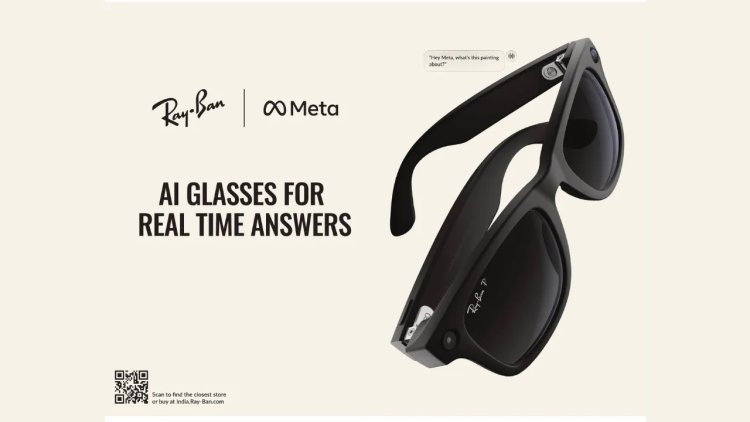
Following an initial digital push that included a collaboration with musician and influencer Yashraj Mukhate, the Ray-Ban Meta AI Glasses have launched an awareness campaign using the print medium in India. This strategic shift from online-centric promotion to a traditional print advertisement, notably published in The Times of India, signals a move to broaden the product’s appeal beyond early tech adopters and influence a wider section of the Indian consumer base. The campaign aims to build familiarity and credibility for the high-tech wearable device, leveraging the established reach and authority of print media. This approach is intended to bridge the gap between the cutting-edge technology of the AI glasses and the mainstream Indian market.
Tapping into India's Appetite for Convenience
The minimalist print advertisement is designed to resonate with India's increasing reliance on quick-commerce and e-commerce, which has cultivated a strong cultural appreciation for instant gratification and convenience. The ad's core message directly links this desire for speed to the functionality of the Meta AI glasses. The copy simply reads: "AI Glasses For Real Time Answers." This line contrasts the experience of waiting for a browser, such as Google Chrome, to load multiple search results with the instantaneous answers provided by the embedded Meta AI chatbot. The campaign strategically positions the smart glasses as the ultimate tool for immediate, on-the-go information access.
Minimalist Design with a Clear Call to Action
The print ad itself is remarkably minimalist, relying on a clean aesthetic to draw attention to its simplicity and core proposition. Instead of complex visuals or lengthy explanations, the ad features only a single, prominently placed QR code. This code serves as the primary call to action, directing curious consumers to Ray-Ban’s official India website. The website, in turn, helps users locate the nearest physical retail store where they can experience the smart glasses firsthand. This method acknowledges the consumer's need to physically interact with a high-value, novel tech product before purchase, effectively using the offline ad to drive traffic to both the online platform and the physical retail channel.
Fierce Competition in the AI Wearables Market
The Ray-Ban Meta AI glasses, which were launched in India on May 19, 2025, with pre-orders opening on May 13 at a starting price of ₹29,900, face an increasingly competitive landscape. While direct rivals like the yet-to-be-released JioFrames and Xiaomi AI Glasses are anticipated, the product also faces strong indirect competition from dedicated AI chatbots and platforms. Companies such as Perplexity and OpenAI's ChatGPT have already begun actively wooing Indian audiences with their own marketing campaigns. This includes influencer partnerships and high-visibility outdoor advertising, suggesting a battle for the attention of the tech-savvy, convenience-seeking consumer.
Competing with Dedicated AI Chatbots
The battle for mindshare is fierce, as the Meta AI embedded in the glasses directly competes with standalone AI tools. Perplexity, for instance, has focused on making its product approachable by collaborating with popular young creators like The Rebel Kid and CarryMinati, positioning its AI as a relatable companion. In contrast, ChatGPT adopted a more restrained, visually clean outdoor campaign in key metro areas like Mumbai. Its billboards stand out by avoiding sensationalism, focusing instead on the subtle yet powerful utility of clear prompts in everyday scenarios. The success of the Ray-Ban Meta glasses in India will hinge on how effectively its marketing can convey the seamless, hands-free integration of AI utility into the stylish format of an everyday accessory.
Bridging the Digital and Physical Customer Journey
The print campaign marks a crucial step in Ray-Ban and Meta’s strategy to integrate the digital and physical customer journey for a high-value, emerging technology product. By using a minimalist, tech-forward QR code within a traditional medium like print, the brand is appealing to both a mature readership and a digitally native audience. The ultimate objective is to encourage physical trials of the glasses, allowing consumers to experience the "real-time answers" firsthand. This approach mitigates the risk associated with buying advanced wearables online, establishing a path from offline awareness to digital engagement, and finally to a confident, informed purchase at a physical retail outlet.