India Sets New Rules for Online Gaming, Ends Years of Confusion
India introduces Online Gaming Rules 2026, bringing clarity to esports and real-money gaming with a structured regulatory framework.
 SociapaHQ
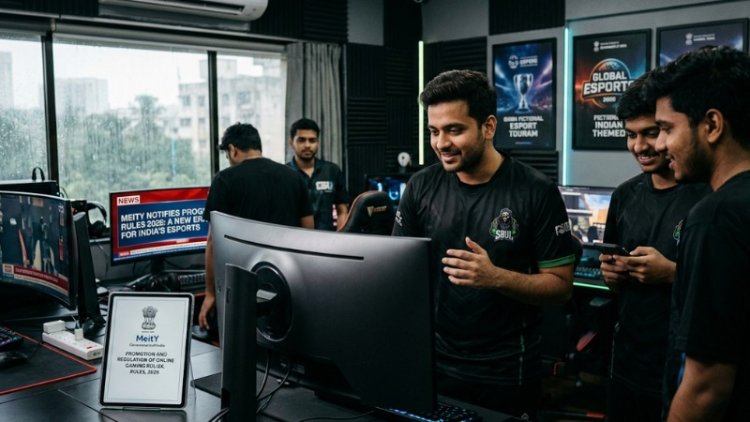
India’s long-standing grey area around online gaming is moving toward clarity. With the notification of the Promotion and Regulation of Online Gaming Rules, 2026, the Ministry of Electronics and Information Technology (MeitY) has outlined a structured framework that comes into effect from May 1, 2026. After years of policy debates and legal ambiguity, the sector now has defined boundaries around what constitutes gaming, betting, and esports.
At the core of the rules is a clear separation between skill-based gaming and real-money wagering, an issue that has shaped industry uncertainty for years. The framework introduces a 90-day determination process for game classification, aiming to prevent platforms from misrepresenting themselves. By doing so, the government is attempting to create a more transparent environment for both operators and users.
For the industry, the response has largely been one of relief. The lack of regulatory clarity has often slowed investments, partnerships, and product innovation. With defined guardrails now in place, companies see an opportunity to scale with greater confidence. The government’s consultative approach, which included industry inputs, has also helped position the rules as forward-looking rather than reactive.
Industry bodies such as the Internet and Mobile Association of India (IAMAI) have highlighted the importance of institutional mechanisms introduced through the framework. For developers, clarity is expected to encourage the creation of higher-quality, globally competitive content. Vibhor Kukreti of KRAFTON India noted that structured guidelines are key to enabling sustainable growth in the sector.
From an esports perspective, the rules attempt to formalise the ecosystem while maintaining its distinct identity. Akshat Rathee of NODWIN Gaming pointed out that the determination process reduces the risk of platforms falsely categorising themselves as esports. At the same time, the framework allows esports to exist both as a publisher-led ecosystem and as a sport under broader governance structures.
However, operational challenges remain. Animesh Agarwal of S8UL highlighted gaps in areas such as banking processes, where legitimate tournament earnings are often treated like gambling income. Issues around team registration, player contracts, and safety standards also need further clarity if the ecosystem is to mature into a fully professional structure.
For hardware players and startups, the rules signal improved trust. Vishal Parekh of CyberPowerPC India noted that clearer regulations could attract global partners who previously viewed the Indian market as uncertain. Early-stage founders, according to LVL Zero Incubator’s Sagar Nair, may now focus more on building scalable products instead of navigating compliance ambiguity.
For brands and marketers, this shift matters. Gaming in India is no longer just a fragmented digital activity, it is becoming a structured media and entertainment ecosystem. Clear regulation reduces risk for brand partnerships, sponsorships, and long-term investments in esports and gaming platforms. It also creates a more credible environment for consumers, where trust and safety become part of the experience.
The rules, however, are only the starting point. While the framework provides structure, its success will depend on execution, especially in areas like financial systems, infrastructure, and institutional support. As India positions itself as a global gaming market, the real impact of these regulations will be measured in how effectively they enable growth without stifling innovation.
For now, the industry has what it lacked for years: clarity. What it builds on top of it will define the next phase of India’s gaming economy.