Quick Commerce Emerges as FMCG’s New Advertising Powerhouse
Quick-commerce platforms are becoming major advertising channels, with ad revenues projected to hit ₹4,900 crore in 2026, reshaping FMCG marketing strategies.
 SociapaHQ
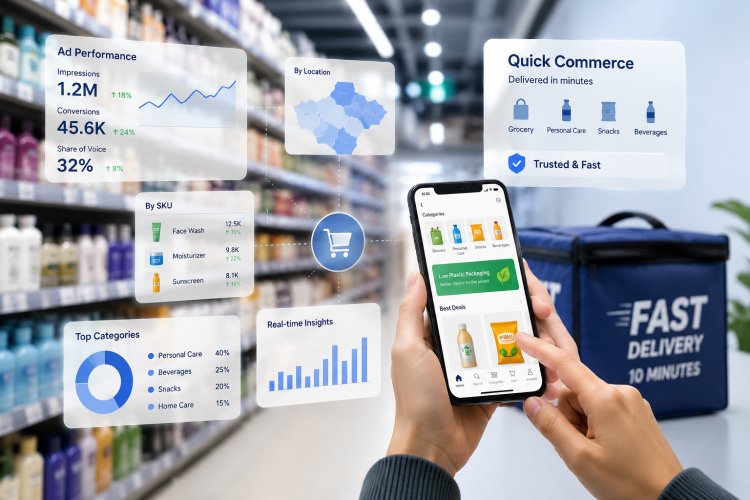
India’s quick-commerce platforms are fast transitioning from delivery services to big advertising businesses, altering the way FMCG brands allocate marketing budgets, launch products and engage consumers.
Ad revenue from the leading quick commerce platforms Blinkit, Zepto and Swiggy Instamart is likely to touch ₹4,900 crore by 2026, up sharply from ₹3,000 crore in 2025, according to data from Datum Intelligence.
The boom is helping the growth of India’s broader retail media market, which WPP Media’s TYNY forecasts to touch ₹30,360 crore this year, making up almost 15% of the country’s total advertising market size of ₹2,01,891 crore.
Also Read: OpenAI Introduces Lockdown Mode for Enhanced ChatGPT Security
Platform Economics:
The fast monetisation of quick-commerce platforms is also altering the economics of the sector. According to CareEdge, India’s quick-commerce gross order value is expected to grow from ₹64,000 crore in FY25 to nearly ₹2 lakh crore by FY28.
As companies look to profit beyond the low-margin delivery fees, they’re increasingly building up revenue streams with advertising, subscription services and private-label offerings. According to industry estimates, advertising revenue now makes up somewhere between 9% and 11% of total revenues for major quick-commerce players.
For FMCG companies, the attraction is the ability of these platforms to shorten the distance from discovery to purchase.
Quick-commerce platforms, unlike traditional advertising channels that generate demand for consumers to eventually come to a store, provide a single digital environment where users can discover, search, and purchase products, sometimes in minutes.
This creates a high-intent ecosystem for brands to measure performance with unprecedented speed and precision.
Also Read: What Does The UK’s Google AI Ruling Mean For Publishers?
Data Advantage:
Marketers are finding real-time consumer data especially valuable to have. Gone are the days when brands waited weeks for retail audits or distributor reports; they can monitor impressions, conversions and share-of-voice metrics almost instantly.
Tools like Zepto Atom’s Persona module help advertisers track performance on a city, neighbourhood and SKU level. Industry estimates suggest that the trial phase of the tool involved more than 1,500 brands, indicating that there is demand for hyperlocal consumer insights.
This trend is in line with other global retail media markets, where players have successfully turned first-party consumer data into significant advertising businesses.
Amazon’s worldwide advertising revenue was over $68 billion in 2025, and Walmart’s ad business was $6.4 billion. In the fourth quarter of 2025 alone, grocery delivery platform Instacart reported $294 million in advertising and related revenue.
While the advent of retail media does not necessarily diminish the role of traditional channels like television, print or outdoor advertising for Indian FMCG brands, which still play a critical role in building long-term brand awareness.
Industry observers say it is forcing marketers to rethink how they allocate and measure budgets.