New York to Fine Brands for Undisclosed AI-Generated People in Ads
New York has introduced a new law requiring brands to disclose the use of AI-generated people in advertisements, with fines for non-compliance.
 SociapaHQ
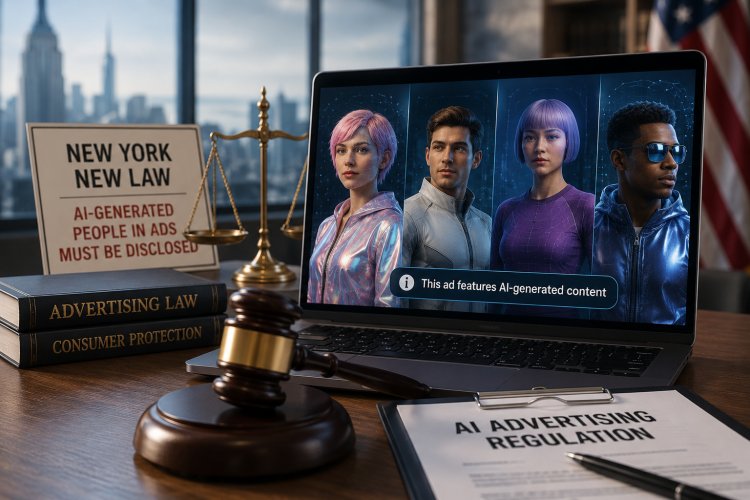
New York has become one of the first jurisdictions to propose legislation specifically aimed at the use of artificial intelligence in advertising, requiring companies to publicly disclose when ads contain AI-generated people.
The law, signed by Governor Kathy Hochul in December and now officially active, bans advertisers from using what the state calls a “synthetic performer” without a clear and conspicuous disclosure.
The bill defines a synthetic performer as a "computer-generated figure designed to look like a real person."
Also Read: ZEE5 to Stream FIFA World Cup 2026, Brings Bhaichung Bhutia to Expert Panel
Mandatory AI Disclosure:
Ads that don’t disclose the use of AI-generated people will be fined.
The law provides $1,000 fines for a first violation and up to $5,000 for repeat violations.
“This measure is an effort to put guardrails around emerging technologies before their use becomes widespread,” said Governor Hochul.
“Instead of letting AI run the show, we’re setting the rules of the road here in New York,” Hochul said.
“The point of plain, truthful disclosure is to protect not only consumers but creative professionals, too,” she added.
Also Read: AB InBev Launches ‘Cheers to Bars’ Campaign Ahead of FIFA World Cup 2026
Rising Use of AI in Advertising:
The legislation comes amid the growing popularity of generative AI tools in advertising, entertainment, and social media.
With advances in artificial intelligence it is becoming increasingly difficult for audiences to distinguish between real actors and digitally generated characters, raising concerns about transparency, authenticity and consumer trust.
“Industry watchers say the law is part of a broader push by regulators to address the explosion of AI-generated content.
The law also contains disclosure requirements and provides a number of exemptions.
The rule does not apply to advertising for films, television programmes, streaming content and video games.
Ads that are audio-only are also excluded, as are situations where artificial intelligence is used solely to translate language.
The exemptions are designed to ease the compliance burden in areas where synthetic content is already widespread or has a functional purpose.











/afaqs/media/post_attachments/aa8f8388a655c7c57255593c3e76a44e58db6bf8f23b35539e52907cdb3a2a29.png)