Brands Blend Service and Spirit at Rath Yatra 2025
At Rath Yatra 2025, brands focus on meaningful, service-led engagement—hydration, comfort, and digital storytelling—over flashy advertising.
 Anureet Kaur
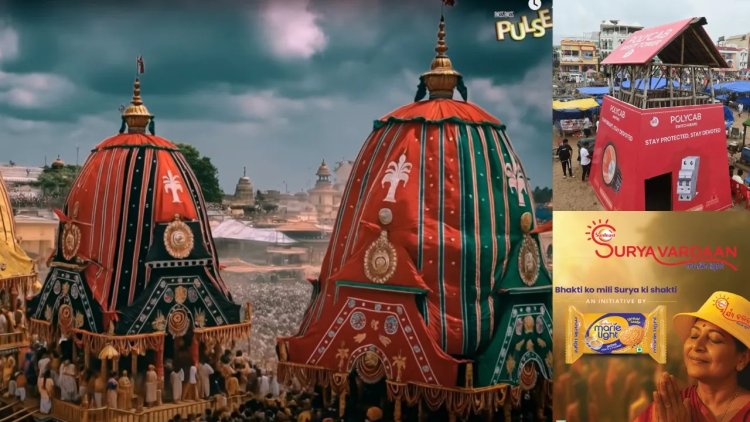
The Jagannath Rath Yatra in Puri, Odisha, one of India’s most revered and historic festivals, has always been a magnet for millions of devotees and pilgrims. But in 2025, the festival is witnessing a new kind of convergence—not just of faith, but of brands and service, where corporate presence is woven seamlessly into the fabric of devotion and community care.
Service Over Spectacle: A New Marketing Mantra
This year’s Rath Yatra, which began on June 27, has seen a marked shift in how brands approach religious festivals. Gone are the days of flashy billboards and celebrity-heavy campaigns. Instead, brands are opting for service-first, culturally sensitive activations that prioritize the needs of pilgrims and align with the spiritual atmosphere of the event.
According to marketing experts, this approach is not just more respectful, but also more effective. With over 15 million visitors expected and brand spending up by 30-40%, companies are investing in purposeful on-ground initiatives that leave a lasting impression—both on consumers and the community.
Notable Brand Activations at Rath Yatra 2025
Coca-Cola:
Coca-Cola set up cooler walls, hydration carts, and mobile units at key points along the yatra route, ensuring that devotees had easy access to chilled beverages throughout their journey. The brand’s presence was designed to offer relief from the summer heat and to create memorable, positive experiences for pilgrims. “Large cultural events such as the Ratha Yatra offer an opportunity to build meaningful connections with consumers through shared tradition and collective experience,” said Vinay Nair, Vice President, Franchise Operations, Coca-Cola India & Southwest Asia.
ITC Foods – Sunfeast Marie Light and Aashirvaad:
ITC’s Sunfeast Marie Light distributed ‘Surjya Vardaan’ cooling caps, infused with sandalwood and menthol, to thousands of pilgrims. These caps, supported by actress Archita Sahu, provided much-needed comfort under the sun.
Aashirvaad Atta launched ‘Bhakti Pathe’, a unique on-ground activation blending traditional rituals with technology. Pilgrims could experience a multi-sensory darshan of Lord Jagannath, Balabhadra, and Subhadra through holographic visuals, AI-powered storytelling, and gamification. Meanwhile, Aashirvaad Salt brought local flavor with nukkad nataks (street plays) performed by artisans, adding a touch of cultural storytelling to the festivities.
Polycab:
Polycab enhanced the safety and convenience of pilgrims by introducing mobile charging stations, beachfront safety watchtowers, a ‘Cool Zone’ near the Gundicha temple, and upgraded police booths. These initiatives focused on providing practical value—comfort, connectivity, and security—at critical touchpoints.
Pulse Candy (DS Group):
Pulse ran a digital campaign, “Jagannath Rath Yatra – The Pulse of India,” featuring an AI-generated film on the festival’s mythology, trivia, and themed social media content. This digital-first approach extended the festival’s reach to online audiences and built on Pulse’s previous AI-driven campaigns at other religious gatherings.
Omnigel (Cipla Health):
Omnigel set up ‘Rahat Seva Kendras’ on Puri Beach, offering free foot, back, and shoulder massages to pilgrims weary from long walks. This service-driven initiative aligned with Omnigel’s brand promise of comfort and care, extending their tagline from “Aapki Khushi Ko Kabhi Dard Ki Nazar Na Lage” to “Aapki Bhakti Ko Dard Ki Nazar Na Lage”.
POGO:
The kids’ channel POGO created a “Jay Jagannath” montage featuring children chanting and dancing to a festive track, blending cultural celebration with youthful energy and sharing it across social media platforms.
From Visibility to Value
Unlike previous years, where brand presence was measured by the size of banners, 2025’s Rath Yatra is all about meaningful engagement and subtle storytelling. Brands are focusing on pilgrim-first civic infrastructure—hydration kiosks, rest zones, and assistance centers—rather than overt advertising. This shift reflects a broader trend seen at other major religious events, like the Maha Kumbh, where brands are moving from mere visibility to genuine value creation for communities.
The Business of Devotion
The Rath Yatra now represents a ₹200 crore marketing opportunity, with total trade value estimated at ₹5,500 crore. Yet, all campaigns are carefully vetted for cultural relevance, with strict limits on overt branding. As Shruti Chaturvedi, founder of Chaaipani, notes, “What we’re enabling isn’t just marketing—it’s meaningful presence”.
Rath Yatra 2025 is setting a new standard for brand engagement at religious festivals in India. By focusing on service, comfort, and cultural resonance, brands are not just promoting products—they’re becoming part of the spiritual journey, building trust and goodwill that lasts long after the chariots have rolled by.