Billboards Banter, But Does It Really Pay Off?
Interactive billboard exchanges boost engagement and social buzz—but may not offer meaningful ROI and risk fading quickly.
 Sandhya
When Billboards Talk to Each Other—Does It Actually Matter?
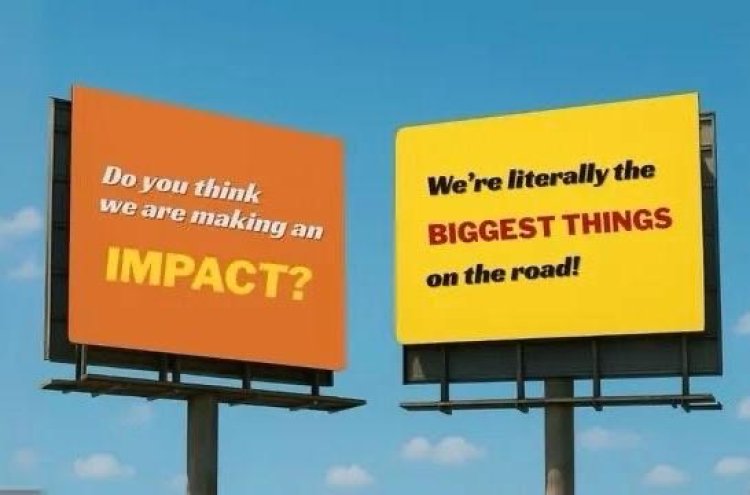
In the evolving advertising landscape, a playful trend has emerged: billboards “talking” to each other. Brands are placing clever, conversation-like advertisements across adjacent hoardings, creating engaging, whimsical messaging that often catches both eyes and social media attention. But is this merely a showy stunt or a strategy that truly delivers results?
Experts find that these billboard banters can significantly enhance consumer engagement and bolster a brand’s personality. Rajat Abbi, VP of Marketing at Schneider Electric, points out that such creative executions are particularly compelling when tied to cultural relevance—like leveraging moments such as the G20 summit to reinforce messages around sustainability.
Dynamic sectors like OTT platforms, food delivery, fintech, and D2C brands are especially suited for this trend. Their fast-moving categories benefit from timely, contextual, and witty messaging that stands out. A notable example includes Tata AIA’s playful billboard positioned opposite a jewelry store—demonstrating how even serious sectors like insurance can execute impactful outdoor creativity.
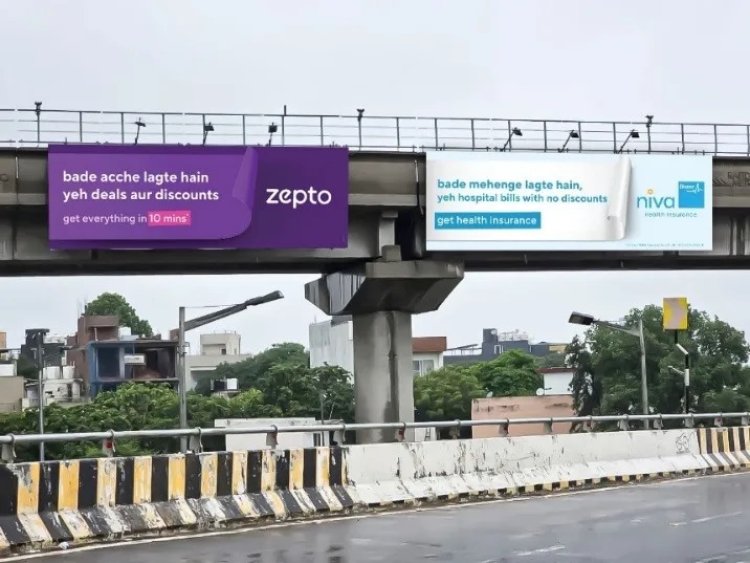
Brands like Niva Bupa have capitalized on timely brand dialogues—for instance, with quick-commerce firm Zepto during Independence Day—paying off in cross-audience engagement and heightened social media visibility. These billboard exchanges often go viral, as curious commuters share snapshots online, extending the campaign’s reach.
The big question remains: Do these creative billboards drive sales or conversions? Not always, experts caution. Saurabh Parmar, a seasoned marketer, emphasizes that deploying creative for creativity’s sake risks overshadowing the brand’s message—especially when product relevance or audience alignment is missing.
Yash Chandiramni, founder of Admatazz, also highlights operational constraints: traditional OOH logistics (approval, printing, and installation) often slow down implementation, making spontaneous billboard banter appealing only in concept but hard to execute in reality.
Many of these “talking” billboards are in fact digital mock-ups created for social media virality rather than being displayed physically. Javaad Ahmed of Talented.agency explains that logistics like securing adjacent hoardings make real-life interactions rare. The primary aim is to spark online sharing and buzz rather than rely on street-level views.
Bhawika Chhabra, MD at Toaster INSEA, adds that the real return often comes from organic social amplification—a witty billboard captures attention, invites shares, and becomes a viral moment, far outweighing its physical reach.
Despite their novelty, conversational OOH campaigns lack sustainability as a loss-leader strategy. Parmar warns that as more brands jump on the trend, consumer attention may wane—transforming what was once fresh into repetitive background noise.
Moreover, brands risk diluting their message or inviting misinterpretation if banter overshadows substance. Niva Bupa’s Nimish Agrawal stresses the importance of vetting such creatives carefully to protect brand integrity and avoid unintended negative associations.
“Talking” billboards are undeniably engaging—offering punchy humor, shareability, and brand personality in spades. But their value lies more in fleeting buzz than in long-term effectiveness. Without clear brand alignment, product relevance, and strategic execution, they risk becoming social gimmicks rather than meaningful marketing tools. Brands should tread thoughtfully: use the trend for awareness and conversation—but never at the cost of messaging and purpose.