Amsterdam Becomes First Capital to Ban Public Ads for Meat and Fossil Fuels
Amsterdam bans meat and fossil fuel advertising from public spaces to align with climate goals.
 SociapaHQ
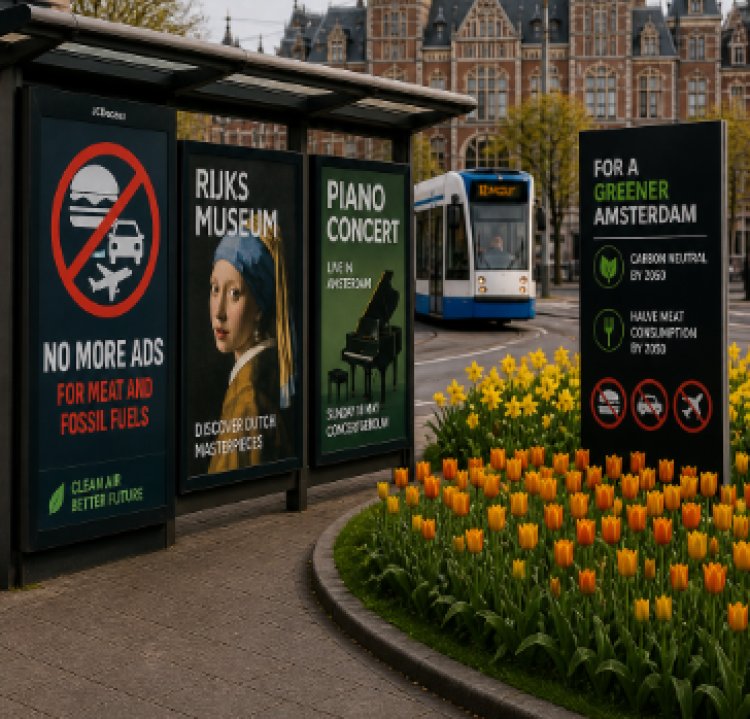
Amsterdam has become the first capital city in the world to ban public advertisements for both meat and fossil fuel products, marking a significant shift in how cities approach climate messaging. Since 1 May, ads promoting burgers, petrol cars and airlines have disappeared from billboards, tram shelters and metro stations across the Dutch capital.
At one of the city’s busiest tram stops, the change is already visible. Where posters for chicken nuggets, SUVs and budget holidays once dominated, the space now features promotions for the Rijksmuseum and a piano concert. The shift reflects a deliberate move by city officials to align public advertising with Amsterdam’s environmental targets.
Also Read: John Ternus vs Tim Cook Net Worth Explained as Apple Inc. Names New CEO
Climate Goals Meet Ad Control:
The policy is tied to broader goals of making the city carbon neutral by 2050 and encouraging residents to cut meat consumption by half over the same period. For local policymakers, the issue is not just about emissions, but also about the influence of advertising on everyday choices.
“The climate crisis is very urgent,” said Anneke Veenhoff from the GreenLeft Party. “If you want to be leading in climate policies and you rent out your walls to exactly the opposite, then what are you doing?”
Anke Bakker, who represents the Party for the Animals and helped drive the restrictions, argues that the move is less about limiting choice and more about reducing commercial pressure. “Everybody can just make their own decisions, but actually we are trying to get the big companies not to tell us all the time what we need to eat and buy,” she said. “In a way, we’re giving people more freedom.”
Ad Ban Sparks Industry Debate:
The ban also aims to remove what Bakker describes as a constant “visual nudge” that can drive impulse purchases and shape lifestyle aspirations. By grouping meat alongside flights, cruises and petrol vehicles, the city is reframing it as a climate issue rather than a purely personal dietary choice.
For brands and advertisers, the impact is more symbolic than financial in the short term. Meat accounted for only about 0.1% of outdoor ad spend in Amsterdam, while fossil fuel related products made up around 4%. Still, the policy signals a broader shift in what categories may face restrictions in public media spaces.
Industry groups have pushed back. The Dutch Meat Association called the move “an undesirable way to influence consumer behaviour,” while travel operators warned it could limit commercial freedom.
For media owners and marketers, Amsterdam’s decision raises a larger question: should public advertising reflect policy goals, or remain a neutral commercial platform? As more cities set aggressive climate targets, the answer may reshape not just what gets advertised, but where and how brands show up in public life.