boAt Enters Dashcam Market With Film Showing Why Proof Matters on Indian Roads
boAt has launched its Hive dashcam range with a digital film built around a roadside argument resolved by video evidence. The campaign positions dashcams as tools of accountability for Indian drivers.
 SociapaHQ
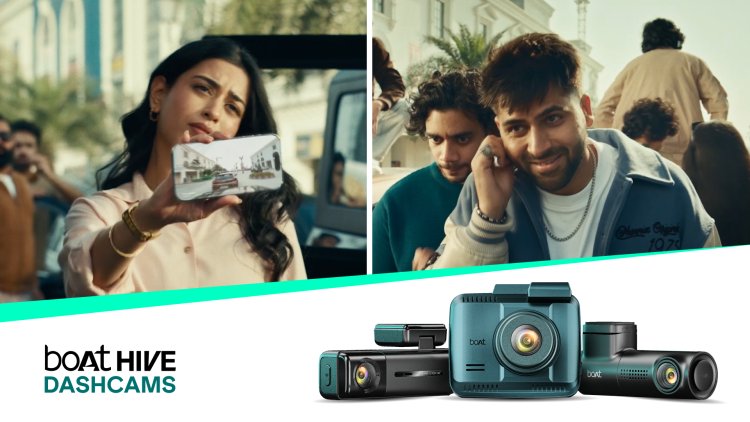
boAt has stepped into the dashcam category with a digital campaign that draws from a familiar urban scene: a roadside argument where both drivers are convinced they are right. The launch film for the Hive Dashcam range uses that everyday tension to underline a shift in how disputes are settled. Volume no longer wins. Evidence does.
The narrative opens at a crowded junction immediately after a collision. A man jumps out of his vehicle, angry and certain of the other driver’s fault. When a woman steps out, he makes a dismissive remark implying she was distracted and reinforces a stereotype often heard in traffic altercations. Onlookers gather, the debate escalates, and each side sticks to its version of events.
Then comes the pivot. When the man asks for proof, the woman presents footage captured on her dashcam. The recording shows he had indicated left but turned right. The crowd’s energy changes instantly. The device becomes the neutral witness, replacing accusation with documentation.
A spokesperson for the company said the insight came from how frequently such standoffs play out across the country. “Traffic arguments are a common sight on Indian roads, often fuelled by differing versions of what actually happened. With ‘Avoid the Dash Ki Dash Moment’, boAt Hive Dashcams capture the facts as they unfold, helping drivers stay calm and confident, driven by safety and backed by proof,” the spokesperson said.
For the brand, the move expands its Hive portfolio from lifestyle-led electronics into a more utility-driven segment. Dashcams sit at the intersection of mobility, insurance, and personal security, categories that are gaining attention as car ownership rises and accident documentation becomes more important.
The communication also mirrors a broader advertising trend where technology is positioned as an arbiter of truth. Instead of dramatic hero shots or feature demonstrations, the product earns relevance through conflict resolution. The film’s use of humour and recognisable dialogue keeps it accessible while still landing the safety message.
boAt is entering a competitive but still developing market in India. Awareness of dashcams remains uneven, yet viral accident clips and social media conversations around road behaviour have made video evidence part of public imagination. By dramatising that moment of reveal, the brand attempts to move the device from optional accessory to practical necessity.
The Hive range includes features such as high-resolution recording, wide-angle coverage and loop capture. Additional capabilities like microSD storage, app connectivity, optional cloud support and parking surveillance through motion and G-sensor triggers are framed as safeguards that work even when the driver is away from the vehicle.
Pricing indicates a mass approach rather than a premium niche strategy, with multiple models positioned across entry and mid tiers. Distribution through the company’s website, major e-commerce platforms and offline retail reflects its existing strength in omnichannel reach.
For marketers watching the auto-tech space, the significance lies in how consumer electronics players are moving toward problem-solving categories tied to accountability and risk. If adoption grows, dashcams could become as routine as reverse cameras once did.
By anchoring its debut in a moment most drivers recognise, boAt is betting that relatability will drive consideration faster than technical persuasion.