SUGAR Tests Lipstick Where Sweat Leaves No Excuses
SUGAR Cosmetics puts its long stay lipstick through an unscripted marathon test, letting real sweat, movement and endurance validate product claims beyond controlled studio conditions.
 Sandhya
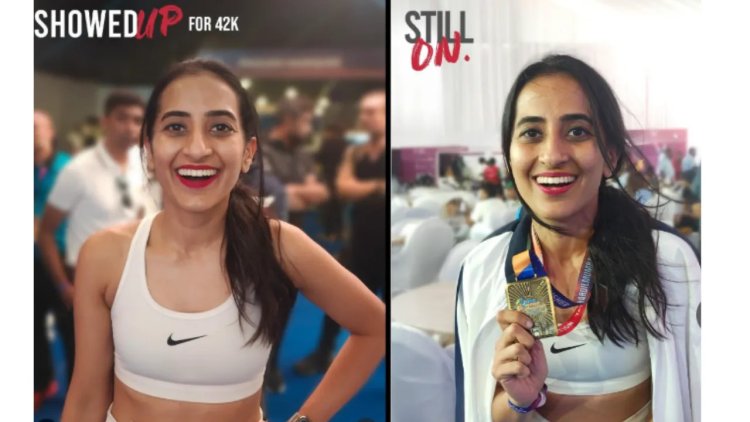
When beauty claims step out of studios and into real life, there is nowhere to hide. SUGAR Cosmetics decided to find out what “long lasting” truly means by placing its lipstick in one of the most demanding environments possible: a marathon.
View this post on Instagram
In a move that blurred the line between product testing and brand storytelling, SUGAR conducted an unscripted endurance test during the Mumbai Marathon. Instead of relying on influencers, retakes or controlled lighting, the brand chose sweat, humidity, constant motion and unpredictability as its testing ground.
At the centre of the experiment was Vineeta Singh, co founder of SUGAR Cosmetics, who wore the lipstick herself while running her fifteenth marathon. The idea did not originate as a conventional campaign. It stemmed from an internal question around honesty in beauty claims. Could a lipstick truly survive hours of running, sweating, hydration breaks and physical strain?
With only a few days left before race day, the team chose to test the claim without guarantees. There were no backup plans, no edits and no safety nets built into the idea. If the product failed, it would do so in full public view.
What followed marked a shift from traditional beauty marketing. Instead of crafting a polished influencer driven narrative, SUGAR reached out directly to women runners from the running community. The invitation was straightforward and transparent: this would be real, unscripted and uncertain.
Several runners agreed to participate, turning the marathon into a collective experiment rather than a staged brand moment. Each runner wore the lipstick while covering long distances in peak humidity, exposing the product to conditions far more intense than typical wear tests.
The focus moved away from aspirational beauty and toward functional credibility. In a category where longevity claims are often demonstrated under controlled environments, SUGAR allowed real world conditions to lead the story. Sweat, friction, time and effort were not edited out but embraced as proof points.
The resulting content captured beauty in motion rather than stillness. Faces reflected effort instead of perfection. Lipstick was shown as it endured, not as it was applied. The brand resisted dramatization, allowing the rawness of the experience to speak for itself.
This approach aligns with SUGAR’s emphasis on designing products suited for Indian conditions. Heat, humidity, long days and active lifestyles have consistently influenced its formulation choices. The marathon simply pushed these everyday challenges to their extreme.
Beyond the product test, the initiative also made a broader statement about authenticity in advertising. By allowing uncertainty into the process, SUGAR challenged the idea that campaigns must begin with certainty. Here, curiosity replaced control, and outcomes were allowed to unfold naturally.
The absence of traditional campaign elements was intentional. There were no scripted dialogues or exaggerated claims. The story emerged through participation, effort and endurance, making the results feel earned rather than manufactured.
For consumers, the marathon test offered something rare in beauty marketing: proof without persuasion. Instead of being told what the product could do, audiences were shown what it endured. The credibility came from experience, not endorsement.
With this initiative, SUGAR Cosmetics demonstrated that some of the strongest brand statements are made not through spectacle, but through truth. By placing its lipstick where sweat leaves no room for excuses, the brand transformed a familiar claim into a real world challenge and let reality deliver the verdict.