Konami brings multi-celebrity push to eFootball India with Messi reward campaign
Konami launches an India-focused eFootball campaign featuring cricketers, actors, and footballers, alongside a limited-time Lionel Messi card. The strategy blends regional influence with gaming engagement.
 SociapaHQ
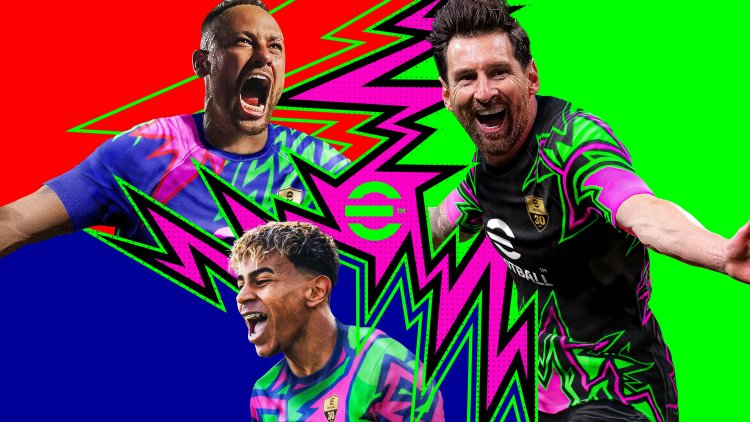
Konami Digital Entertainment has launched a new India-focused campaign for eFootball™, combining cricket, cinema, and football personalities to expand the game’s cultural footprint beyond its core gaming audience.
The campaign features cricketers Rinku Singh and Varun Chakravarthy, Malayalam actors Naslen Gafoor and Chandu Salim Kumar, and footballers Sahal Abdul Samad and Shubhasish Bose. Alongside content collaborations, the brand is also rolling out a limited-time Lionel Messi card available globally from March 12 to April 2, supported by in-game challenges and rewards.
The approach signals a clear localisation strategy. Instead of relying solely on global football appeal, Konami is tapping into regional influence—particularly in Kerala and West Bengal, two markets with strong football culture but distinct media consumption patterns. By collaborating with local creators like Black Mamba Gaming, Mallu PES Master, LiarsFC, and fan communities such as Manjappada, the campaign blends grassroots fandom with digital-first amplification.
This move reflects a broader shift in gaming marketing in India. Rather than positioning games purely as products, publishers are increasingly building cultural relevance through cross-industry faces. Cricket and cinema, traditionally dominant in Indian entertainment, are being used as entry points to drive awareness for gaming ecosystems that are still growing in mainstream adoption.
The inclusion of influencers and community-led distribution also points to a decentralised content strategy. Instead of one central campaign narrative, eFootball™ is enabling multiple micro-narratives across regions and platforms. This increases relatability but also fragments messaging—making consistency a potential challenge.
The Messi card, meanwhile, acts as a performance lever. While the celebrity collaborations build top-of-funnel awareness, the in-game reward system is designed to drive immediate engagement and retention. This dual-layer strategy—culture + conversion—is becoming increasingly common in gaming campaigns, especially in mobile-first markets like India.
For brands and marketers, the campaign highlights how gaming is no longer a niche vertical. It sits at the intersection of sports, entertainment, and social media culture. The key takeaway is not just the use of celebrities, but the mix: global icon (Messi), national sports figures, regional film talent, and hyperlocal creators—all within one campaign ecosystem.
However, this also raises a strategic question. When multiple cultural touchpoints are used simultaneously, does the brand narrative become richer—or diluted? For a title like eFootball™, which already competes with established gaming franchises and sports entertainment formats, clarity of positioning will be critical.
As gaming adoption grows in India, campaigns like this indicate that success may depend less on the game itself and more on how effectively it embeds itself into everyday culture.