ITC Drags Britannia to Court Over Biscuit Pack
ITC has approached the Calcutta High Court, alleging Britannia’s 50:50 Cheese Dipped packaging closely resembles Sunfeast Wowzers and seeking restraint on sales.
 Sandhya
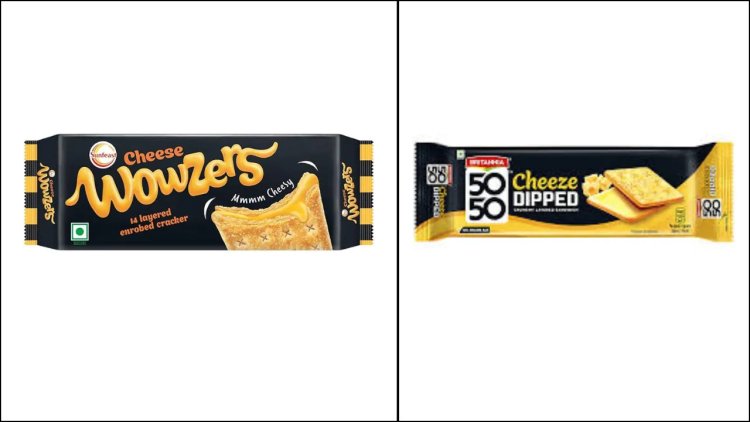
A packaging dispute has brought two major food companies into the spotlight, with ITC approaching the Calcutta High Court alleging that Britannia Industries has copied the trade dress of its cheese biscuit brand, Sunfeast Wowzers. The company has sought legal restraint on the manufacture and sale of the rival offering, according to court filings referenced in reports.
The matter was heard on Friday by Justice Ravi Krishan Kapur. The court did not grant an ad-interim injunction at this stage and instead asked both sides to submit affidavits, setting the stage for a more detailed examination of claims and counterclaims.
At the centre of the dispute is visual identity — a crucial competitive lever in high-velocity retail categories. ITC launched Sunfeast Wowzers toward the end of 2024 as its entry into the emerging premium cheese-biscuit segment. In its petition, the company said the product had scaled rapidly, reaching the number two position in the category with sales of approximately ₹51 crore within a year.
Britannia subsequently entered the space with 50:50 Cheese Dipped. ITC has argued that the new entrant’s packaging mirrors the look and feel of Wowzers closely enough to risk confusing shoppers.
In intellectual property terminology, such disputes fall under trade dress — the overall visual cues that allow consumers to associate a product with its source. These cues can include colour palettes, typography, layout, imagery and structural design. Companies invest heavily in these elements because recognition at the shelf often determines purchase.
ITC has told the court that it conceived Wowzers with a distinctive artistic identity, which it considers protected under the Copyright Act, 1957. The company claims exclusivity over a combination of black and orange-yellow tones and says Britannia’s pack is identical or deceptively similar.
To strengthen its position, ITC has referenced advertising spends, sales momentum and consumer familiarity as evidence that the design has acquired goodwill. From a legal perspective, establishing recognition is critical; it supports arguments that imitation can dilute brand equity or divert sales.
The case unfolds within a segment that has been heating up. Cheese-flavoured layered biscuits were popularised in India by Mayora’s Malkist, and the premium end of the category has attracted fresh attention from domestic majors seeking higher margins and differentiated propositions.
For marketers, the conflict highlights how packaging has evolved from functional wrapper to strategic asset. In crowded modern trade aisles and online thumbnails, visual shorthand can carry as much weight as price or flavour. As a result, disputes over similarity are becoming more frequent, particularly when late entrants try to signal equivalence.
Britannia has not yet publicly detailed its defence in court, and the directive to file affidavits suggests arguments on originality, differentiation and consumer perception will be debated in the coming hearings.
The absence of immediate relief also means both products are likely to remain in the market while proceedings continue, keeping competitive intensity high.
Beyond the legal merits, the episode is a reminder that brand building does not end at launch. Protecting distinctive assets can be as important as creating them, especially in categories where replication cycles are short.
How the court interprets similarity, intention and potential confusion will be watched closely by the FMCG sector, where design boundaries often sit on thin lines