India’s Digital Growth Shifts to Tier 2, 3 and Rural Markets: Report
A new SoCheers report finds that Tier 2, Tier 3 and rural markets will drive the next phase of India’s digital growth, reshaping brand strategies and online engagement.
 SociapaHQ
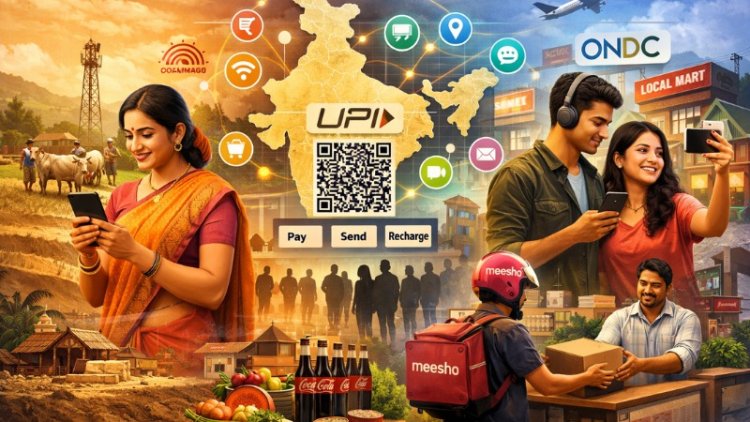
India’s digital economy is entering a new phase of growth, and the momentum is increasingly coming from beyond the metros. A new report by SoCheers, titled Breaking the Metro Myopia, argues that the next wave of internet expansion will be led by digitally fluent consumers in Tier 2, Tier 3 and rural markets rather than traditional urban early adopters.
The study suggests that India has moved past the stage of basic digital access and into one of deep digital dependence. Foundational infrastructure such as Aadhaar and UPI has laid the groundwork, but behaviour now defines the ecosystem. Digital payments, once seen as optional conveniences, have become everyday utilities. UPI is currently processing an estimated 16 to 17 billion transactions every month, accounting for more than 80 percent of India’s total digital payment volume.
According to the report, India’s “Next Billion Users” are not hesitant newcomers to the internet. They are mobile-first, comfortable navigating digital platforms, and increasingly selective in how they shop, transact and consume content. Gen Z alone is estimated to contribute nearly half of India’s consumer spending, while women in non-metro regions are emerging as influential economic participants. Many are using digital platforms to run small businesses, resell goods, or independently manage household finances.
The report highlights a key strategic gap: brands that continue to approach Bharat as a diluted extension of metro India risk misreading the market. Consumers outside major cities demand localisation rather than simple translation. Vernacular interfaces, voice-led navigation, culturally grounded storytelling and community validation are not optional enhancements but core expectations.
Trust also plays a central role. In smaller markets, negative experiences can spread quickly through close-knit networks. The report notes that a single failed interaction can impact not just one customer but an entire community’s perception of a brand.
Several case studies cited in the report point to brands that have built differentiated strategies for non-metro audiences. Companies such as Meesho, ShareChat, HUL and Coca-Cola have adopted vernacular content strategies, hyperlocal creator collaborations and product adaptations aligned with regional realities. In contrast, standardised campaigns built around metro influencers or top-down narratives often fail to generate sustained traction in these markets.
Looking ahead, the report frames Digital Bharat as a global case study in inclusive digital transformation. With expanding rural connectivity, rising smartphone penetration and government-backed initiatives like ONDC, non-metro regions are projected to drive nearly half of India’s ₹29.88 lakh crore online economy by 2030.
For marketers and business leaders, the implications are structural rather than tactical. Growth is no longer concentrated in urban hubs with high disposable incomes. Instead, it is unfolding across aspirational markets where digital tools are integrated into everyday life. Success in this environment depends on cultural fluency, language sensitivity and product design aligned with local contexts.
The report’s conclusion is direct: India’s digital future will be shaped outside glass offices and startup clusters. It will be driven by consumers using low-bandwidth smartphones, operating in regional languages, and engaging with brands that understand their realities. For businesses, adapting to this shift is not an optional expansion strategy. It is central to remaining relevant in the next phase of India’s digital economy.