AWS Says AI Will Move From Writing Help to Doing Work
AWS CEO Matt Garman says the next phase of AI will centre on autonomous agents capable of completing enterprise workflows. The shift could redefine how businesses measure returns from automation.
 Sandhya
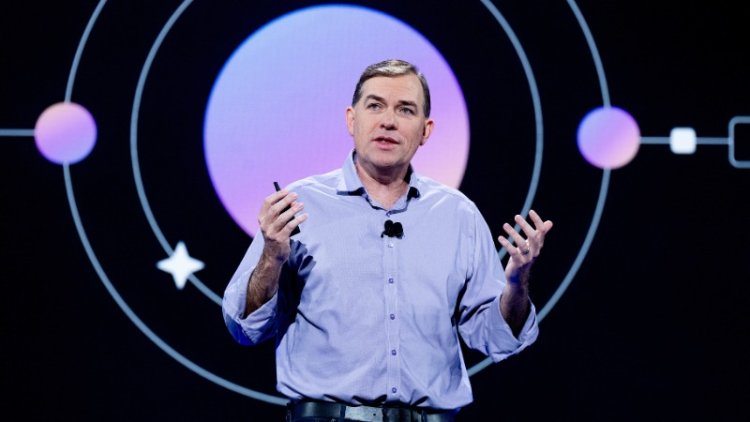
At Amazon Web Services re:Invent 2025, CEO Matt Garman laid out what could become the defining shift of the AI economy: moving from systems that help employees generate content to systems that independently complete real work.
For the past two years, generative AI has largely been deployed as a productivity enhancer — drafting emails, summarising meetings and accelerating research. Garman argued that the next wave will be measured not by assistance, but by completion.
“This is the difference between ‘summarise what happened’ and ‘go process my insurance claims,’” he said.
The distinction matters. Enterprises evaluating returns from AI investments are under pressure to show operational impact, not novelty. Autonomous execution, rather than faster typing, changes the financial equation.
Inference becomes the engine
Central to AWS’s thesis is inference — the ability of models to analyse live information, make decisions and trigger downstream actions. Instead of waiting for human prompts, systems can move inside workflows.
Garman described inference as a new primitive in computing. Alongside storage, networking and databases, it introduces the capacity for applications to reason in real time.
That capability fuels the rise of AI agents, software units designed to navigate complex sequences such as validations, approvals, reconciliations or interventions with limited supervision.
From pilots to production
To push customers toward deployment, AWS introduced Amazon Bedrock AgentCore, positioned as infrastructure for building and governing agents at scale.
The platform focuses on controlled access to enterprise environments, allowing agents to connect with internal tools, APIs and datasets while maintaining security boundaries. The emphasis reflects a broader industry transition: experimentation is giving way to integration.
AWS also presented a set of frontier agents, including Kiro, alongside specialised options for security and DevOps use cases. Rather than marketing them as replacements for workers, the company framed them as accelerators of throughput.
Where agents live
Garman outlined a familiar three-layer stack: infrastructure at the base, platforms in the middle and applications on top. Agents sit closest to applications but rely on deep hooks into underlying systems.
This arrangement lets companies automate segments of existing processes without dismantling their technology foundations. Developers can insert autonomy into finance operations, customer service flows or software pipelines with incremental changes.
AWS believes millions of such agent-enabled services will emerge, reshaping how digital work is distributed between humans and machines.
Why marketers and media should care
For brands and platforms, the evolution signals faster back-end execution. Campaign approvals, compliance checks, analytics reporting and customer interactions could increasingly be handled by automated chains rather than teams.
The cultural shift is significant as well. If AI systems become responsible for finishing tasks, accountability frameworks, transparency norms and trust mechanisms will need to evolve.
What once looked like a writing assistant may soon resemble an operational partner.