Union Budget 2026 Puts Digital, AVGC and AI at the Centre of India’s Marketing Growth Story
Union Budget 2026 signals major opportunities for marketers with strong focus on digital infrastructure, AVGC talent development, MSME funding and AI-led innovation.
 Sandhya
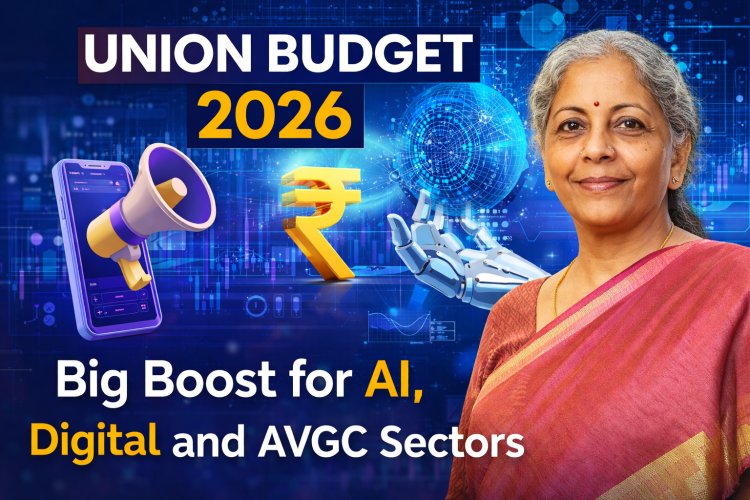
India’s marketing, advertising and media ecosystem is set to feel the ripple effects of the Union Budget 2026, with policy direction strongly favouring digital infrastructure, creative capability building and artificial intelligence-led transformation. Presented by Nirmala Sitharaman, the budget frames technology not as an enabler on the side, but as the backbone of economic growth and competitiveness.
For marketers, the signals are clear. The government is prioritising the pipes, platforms and people that will shape how brands reach consumers in the coming decade. Rather than short-term consumption pushes, the emphasis is on building structural capacity — from broadband expansion and logistics upgrades to talent pipelines for digital content creation.
One of the standout areas is support for the AVGC (Animation, Visual Effects, Gaming and Comics) ecosystem. Plans to expand creator labs across thousands of schools and hundreds of colleges aim to formalise creative technology as a mainstream career path. Over time, this is expected to widen the pool of trained storytellers, designers and production specialists available to agencies, studios and digital-first brands.
Funding commitments reinforce that direction. Dedicated allocations for talent development and institutions working in film, XR and immersive media suggest that digital content infrastructure is increasingly being viewed on par with cultural infrastructure. Industry observers believe this could help India retain more intellectual property locally while also strengthening its export potential in entertainment and branded content.
For the marketing community, this talent push may translate into richer regional capability, lower production bottlenecks and faster scaling of vernacular and hyperlocal storytelling. As more creators enter the ecosystem, competition and innovation in formats are likely to intensify.
The budget also extends significant attention to MSMEs and startups, many of which operate in marketing technology, digital media services and creator-led businesses. Expanded access to financing, credit mechanisms and equity support is designed to help smaller firms participate more meaningfully in the formal digital economy. For brands, a stronger startup layer usually means better tools, sharper analytics and more specialised service partners.
Infrastructure measures add another layer of impact. Investments in transport, supply chains and connectivity are expected to reduce distribution friction, allowing businesses to serve previously hard-to-reach audiences. At the same time, wider broadband and 5G reach will bring new consumers online, enlarging the addressable market for digital advertising and commerce.
Artificial intelligence receives dedicated attention as well. Continued funding for the national AI mission, along with provisions for research, skilling and ecosystem development, signals that automation and intelligence-led solutions will increasingly influence how campaigns are planned, targeted and measured. For agencies and in-house teams, this means preparing for deeper integration of data science into everyday marketing operations.
There is also an institutional move toward linking education and employability in emerging technologies. By evaluating how AI and automation will reshape work, policymakers are attempting to future-proof the workforce that marketing, media and digital businesses will depend on.
Taken together, the budget outlines a future where scale, creativity and technology converge. The immediate gains may not be visible overnight, but the long-term direction suggests a more organised, better funded and innovation-friendly environment for India’s marketing economy.