Zudio Marketing Mix Explained (4Ps)
Zudio’s growth is powered by rapid trend rotation, everyday low pricing and store-led discovery. Here’s how the value-fashion retailer turns speed and simplicity into scale.
 SociapaHQ
Zudio has emerged as one of India’s most aggressive value-fashion success stories by rejecting many of the conventions followed by traditional apparel retailers. Instead of hero products, heavy advertising or deep discount cycles, the brand runs on speed, simplicity and relentless newness.
At the heart of its model is a product strategy designed around rapid trend replication and tight inventory control. Collections span men’s, women’s and kidswear, supported by footwear and beauty add-ons, but depth per design is intentionally limited. New styles arrive frequently and disappear just as quickly, often within weeks. The objective is not to create long-lasting wardrobe staples but to deliver a constant sense of discovery.
This creates a powerful behavioural trigger. When shoppers believe a design may not be available tomorrow, deliberation reduces. Purchase decisions become impulsive. The store visit starts to resemble a hunt, where the reward lies in finding something before others do.
If product velocity brings customers in, pricing ensures they do not pause too long before heading to the billing counter. A large share of merchandise sits below ₹999, with much of the assortment concentrated between ₹299 and ₹799. Unlike retailers that mark high and discount later, Zudio follows an everyday low pricing approach. The absence of complex promotions removes negotiation from the shopper’s mind. Consumers are trained to buy when they see something they like rather than wait for a sale event.
For the business, this reduces promotional dependency and helps maintain predictable buying patterns. For the customer, it simplifies judgement. The internal dialogue shifts from “Should I wait?” to “Should I pick more than one?”
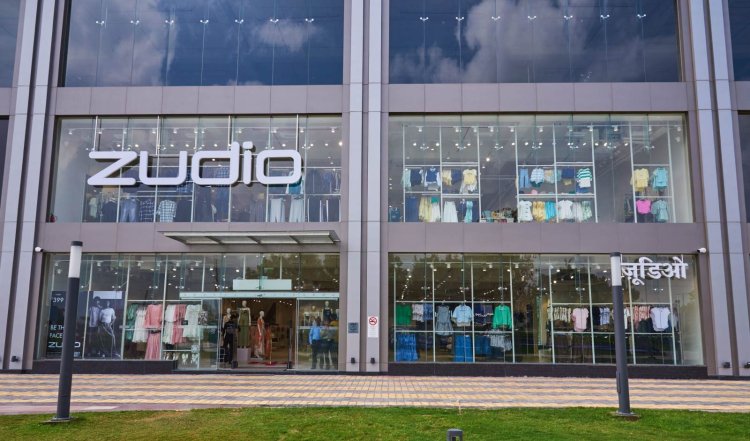
Interestingly, the company achieves this scale with minimal traditional promotion. Mass-media presence is limited, celebrity endorsements are rare, and its digital voice is relatively restrained compared to fashion peers. Instead, awareness is driven by visibility and conversation. High-footfall locations, recognisable storefronts and the culture of social media haul videos generate organic amplification. Word-of-mouth becomes more credible because it is rooted in personal discovery.
In effect, the store becomes the primary advertising medium. Each visit offers enough novelty to justify the next.
Distribution choices reinforce the same philosophy. While many brands prioritise e-commerce, Zudio remains firmly physical-retail first. Large-format outlets in malls and busy high streets, along with rapid penetration into Tier 2 and Tier 3 cities, create density and accessibility. Store design is functional, with low-cost interiors, straightforward layouts and fast checkouts. The environment is built for throughput rather than leisure.
These outlets behave less like curated lifestyle spaces and more like efficient fashion warehouses where volume and velocity determine success.
Taken together, the system reveals a clear proposition. Zudio is not promising durability or exclusivity. It is promising immediacy, affordability and constant refresh. Customers are encouraged to return often, browse quickly and buy without friction.
In a market where consumers are increasingly comfortable with fast cycles and frequent wardrobe updates, that formula has proven powerful. The brand’s growth suggests that for a large segment of Indian shoppers, the excitement of what is new today outweighs the idea of what might last tomorrow.