Campa Cola Comeback: Ambani’s Disruptive Strategy Shakes Indian Market
Discover how Mukesh Ambani revived Campa Cola, disrupting India’s soft drink market with bold strategies, affordable pricing, and nostalgia, challenging Coca-Cola and Pepsi’s dominance.
 Anureet Kaur
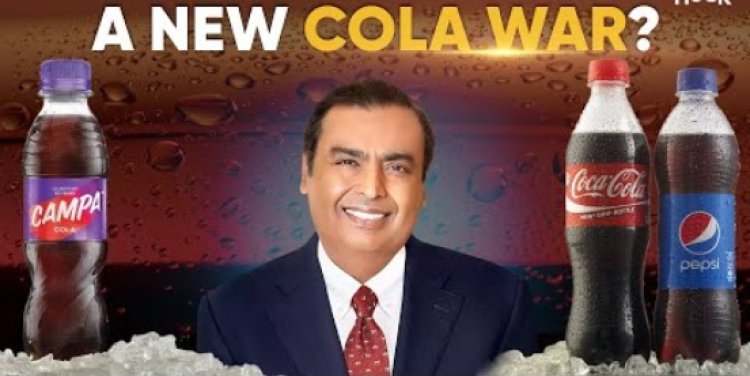
Campa Cola’s Comeback: How Mukesh Ambani Is Shaking Up India’s Cola War
The Forgotten Fizz
In the 1980s, Campa Cola was more than a drink—it was a phenomenon. As India’s answer to the global giants, it filled a void left by Coca-Cola’s exit and quickly became a staple at every celebration, wedding, and family gathering. Its memorable jingle and “The Great Indian Taste” slogan made it a symbol of homegrown pride. But when the winds of liberalization swept in during the 1990s, the doors reopened for Coca-Cola and Pepsi. With their deep pockets, star-studded ads, and sprawling distribution, these multinationals pushed Campa Cola to the sidelines, reducing it to a nostalgic memory for millions.
The Big Bet: Ambani’s Acquisition
Fast forward to 2022. Mukesh Ambani, India’s most formidable business strategist, saw opportunity where others saw a relic. Reliance Retail acquired Campa Cola for just ₹22 crore—a tiny sum for the conglomerate, but a move loaded with ambition and vision. The question on everyone’s mind: Why would the country’s richest man revive a failed soft drink brand in a market dominated by billion-dollar giants?
A Masterplan Rooted in Disruption
Ambani’s strategy wasn’t about nostalgia alone. It was about disruption, scale, and rewriting the rules of the game—much like he did with Jio in the telecom sector. Here’s how the plan unfolded, as detailed in the viral case study video and supported by business analyses:
1. Aggressive Pricing:
Reliance launched Campa Cola at a jaw-dropping price of just ₹10 for a 200ml bottle, undercutting both Coke and Pepsi. This was more than a marketing gimmick; it forced the global giants to rethink their pricing and profitability in India’s price-sensitive market.
2. Unmatched Distribution:
With over 15,000 Reliance Retail stores, JioMart’s e-commerce reach and deep penetration into Tier 2 and Tier 3 towns, Campa Cola suddenly had shelf space and visibility that even the global brands envied. The brand wasn’t just back in metros—it was everywhere, from kirana shops to hypermarkets.
3. IPL and Celebrity Blitz:
Ambani leveraged his ownership of Mumbai Indians and his connections in Indian cricket to plaster Campa Cola branding across IPL matches. This gave the brand instant mass appeal and relevance with the youth, something Coke and Pepsi had long monopolized.
4. Digital-First Marketing:
While the established players were still pouring money into traditional TV ads, Campa Cola went digital—partnering with influencers, regional celebrities, and sports personalities to create a buzz on social media. This helped the brand connect with Gen Z and millennials.
5. Localized Flavors and Innovation:
Ambani didn’t stop at cola. He relaunched Campa Orange and Campa Lemon, and hinted at future regional flavors like jeera and nimbu to tap into uniquely Indian tastes. This was a direct answer to the Indian consumer’s demand for variety and local relevance.
Empowering Indian MSMEs
But the revival wasn’t just about taking on Coke and Pepsi. Reliance’s strategy was also about empowering India’s vast network of micro, small, and medium enterprises (MSMEs). By localizing bottling, packaging, and logistics, Campa Cola’s comeback created opportunities for thousands of small businesses—from PET bottle makers to cold chain logistics startups and regional advertising agencies. This ecosystem approach meant that every bottle of Campa Cola sold was also a win for Indian entrepreneurship.
The Economics of Disruption
Selling a soft drink at ₹10 may sound unsustainable, but the video and industry experts explain how Reliance’s scale, supply chain efficiencies, and backward integration make it possible6. By cutting out middlemen, leveraging existing retail infrastructure, and driving massive volumes, Campa Cola can afford to keep prices low and still turn a profit—while forcing competitors to slash prices or risk losing market share.
Challenges and the Road Ahead
Of course, the path isn’t without hurdles. Scaling cold chain supply in India’s climate, ensuring consistent quality, and breaking deep-rooted consumer habits are all formidable challenges6. But if there’s one thing Ambani’s track record shows, it’s that he thrives on turning challenges into opportunities.
The New Cola War
Campa Cola’s return has already sent shockwaves through the market. Coca-Cola and Pepsi have been forced to respond with price cuts, new variants, and increased rural outreach6. The battle is no longer just about taste or advertising muscle—it’s about who can win the hearts, wallets, and loyalty of the next billion Indian consumers.
Conclusion: More Than Just a Drink
Campa Cola’s revival is more than a business story—it’s a case study in how to disrupt an entrenched market, empower local businesses, and tap into the collective memory of a nation. Under Mukesh Ambani’s leadership, the fizz is back, and this time, it’s not just about nostalgia. It’s about rewriting the rules of the game and proving that in the world’s most dynamic consumer market, the underdog can still pack a punch.