
- Amazon tested India with the Junglee comparison site in 2012 and launched amazon.in as a marketplace in June 2013.
- It localised aggressively, adding Indian languages, local pickup points and a Prime membership launched in July 2016.
- Flipkart's head start, strict foreign investment rules for marketplaces and value rivals shape its strategy.
Amazon: origin & market gap
Amazon was founded by Jeff Bezos in 1994. It first tested India in February 2012 with Junglee.com, a comparison shopping site that let users browse products from other sellers. In June 2013 it launched amazon.in as a full marketplace, arriving six years after Flipkart. Junglee was closed in 2017 and redirected to Amazon India.
The gap Amazon saw was the size of the opportunity, not an empty market. Flipkart already led, and Indian shoppers were price-sensitive and cautious about buying online. The Amazon marketing strategy in India was to take its global strengths, selection, reliable delivery and customer service, and rebuild them for Indian habits.
That meant local choices. The site now supports English and several Indian languages, including Hindi, Tamil, Telugu, Kannada, Malayalam, Bengali and Marathi. It runs more than 800 pickup points inside local shops. In 2019 it opened a large campus in Hyderabad, its first owned campus outside the US.
Amazon marketing mix (4Ps)
Everything store, Indian edition
Amazon India sells across electronics, fashion, home, grocery and more through third-party sellers. It layers services on top, including Prime membership, streaming and payments, so shoppers have more reasons to return. Languages beyond English help reach new internet users.
- Wide marketplace selection
- Prime membership since July 2016
- Interface in eight languages
Value plus membership
Prices compete with Flipkart on deals and bank offers, while Prime changes the maths for frequent buyers with faster delivery and bundled entertainment. The membership is designed to lock in loyalty rather than win each order on price alone.
- Deals and bank offers
- Prime delivery and entertainment benefits
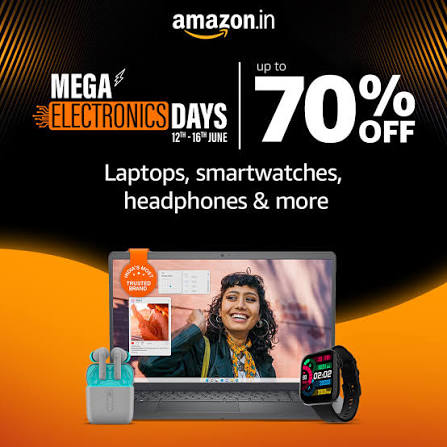
- Festive discount events
Festive events and service
Amazon's flagship Indian sale is the Great Indian Festival, held around Diwali [verify]. Year-round, its promotion leans on reliability and customer service messages, with heavy TV and digital advertising during sale seasons.
- Great Indian Festival sale
- Prime Day events
- Service and trust messaging
Local pickup, national reach
Amazon combines its own fulfilment network with partners, and uses 800+ pickup points in local stores to reach shoppers who cannot receive deliveries at home. The approach adapts a global logistics model to Indian neighbourhoods.
- Fulfilment and delivery network
- 800+ pickup points in local shops
- Seller support and onboarding
Amazon brand journey
- 1994Jeff Bezos founds Amazon in the US.
- 2012Amazon launches Junglee.com in India as a comparison shopping site.
- 2013Amazon.in launches as a marketplace in June.
- 2016Amazon Prime launches in India in July.
- 2017Junglee.com closes and redirects to Amazon India.
- 2019Amazon opens its Hyderabad campus, its first owned campus outside the US.
Official Amazon channels
Direct verified channels for Amazon.
Challenges & response
Amazon advertising campaigns
Great Indian Festival
Amazon India's annual festive sale, its biggest acquisition and sales event of the year. [verify]
Key learnings from the Amazon case study
Arriving second means you must localise faster than the leader.
Language is a distribution channel for the next wave of users.
Memberships build loyalty in price-driven markets.
Local partners can fix last-mile gaps at low cost.
Frequently asked questions about Amazon
When did Amazon launch in India?
Amazon first entered India in February 2012 with Junglee.com, a comparison shopping website. It launched amazon.in as a full online marketplace in June 2013. Junglee was closed in 2017 and its traffic was redirected to Amazon India.
What is Amazon's marketing strategy in India?
Amazon's marketing strategy in India is to localise its global model. It offers wide selection through sellers, Prime membership since 2016, festive sales, support for eight languages and more than 800 pickup points in local shops, aiming to win trust and repeat purchases from price-conscious shoppers.
When did Amazon Prime launch in India?
Amazon Prime launched in India in July 2016. It offered faster delivery on eligible items, and Amazon's video service was announced as coming soon at the time of launch. Prime has since become a central part of Amazon's plan to build loyalty in India.
Who are Amazon India's competitors?
Amazon India's main rival is Walmart-owned Flipkart. It also competes with Meesho in value e-commerce, Reliance's JioMart and AJIO, and quick-commerce apps such as Blinkit, Zepto and Swiggy Instamart that promise delivery within minutes.
Curated and verified by the Sociapa Research Desk. Brand names, trademarks, and logos belong to their respective owners.