
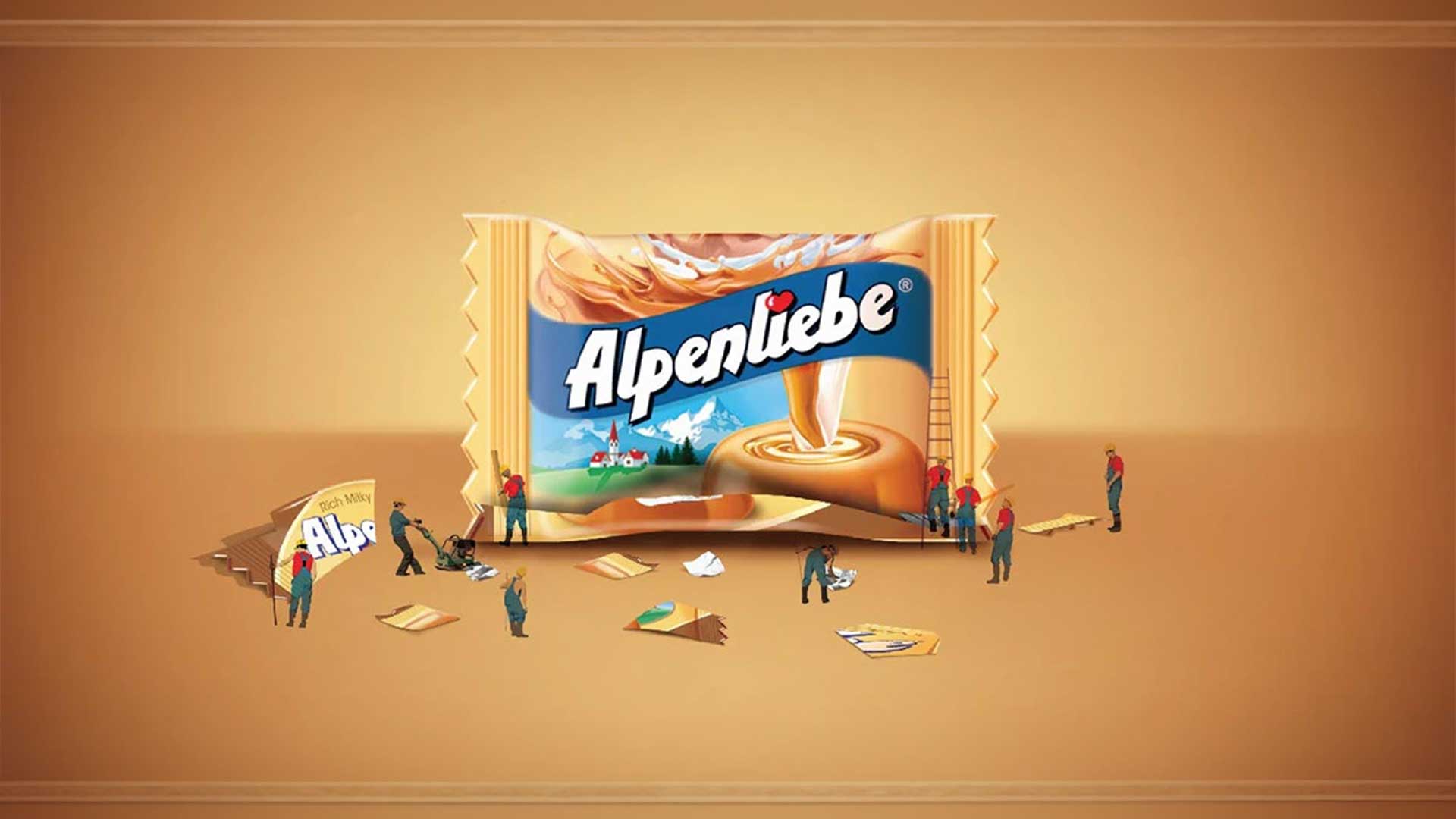
- Perfetti Van Melle entered India in 1994 with Center Fresh and launched Alpenliebe in 1995.
- The brand made its unusual name part of the pitch and built everything around one craving line, Jee Lalchaye Raha Na Jaye.
- It kept growing by adding formats at low price points, from lollipops to Juzt Jelly, and by moving to social content.
Alpenliebe: origin & market gap
Perfetti Van Melle, the Italian-Dutch confectionery group, came to India in 1994 with Center Fresh chewing gum. A year later it launched Big Babol and Alpenliebe. The name is German, roughly love of the Alps, and was hard for most Indians to say. Instead of hiding that, early advertising leaned into it and paired the name with a simple promise of irresistible taste.
India's candy market in the mid-1990s was crowded with low-priced local sweets and a few big national names. The gap Alpenliebe went after was a slightly more indulgent caramel candy that still sold for small change at the kirana counter. The Alpenliebe marketing strategy has stayed consistent for three decades: one emotional line about temptation, a steady flow of new flavours and formats, and prices that suit a pocket-money purchase.
Alpenliebe marketing mix (4Ps)
One brand, many formats
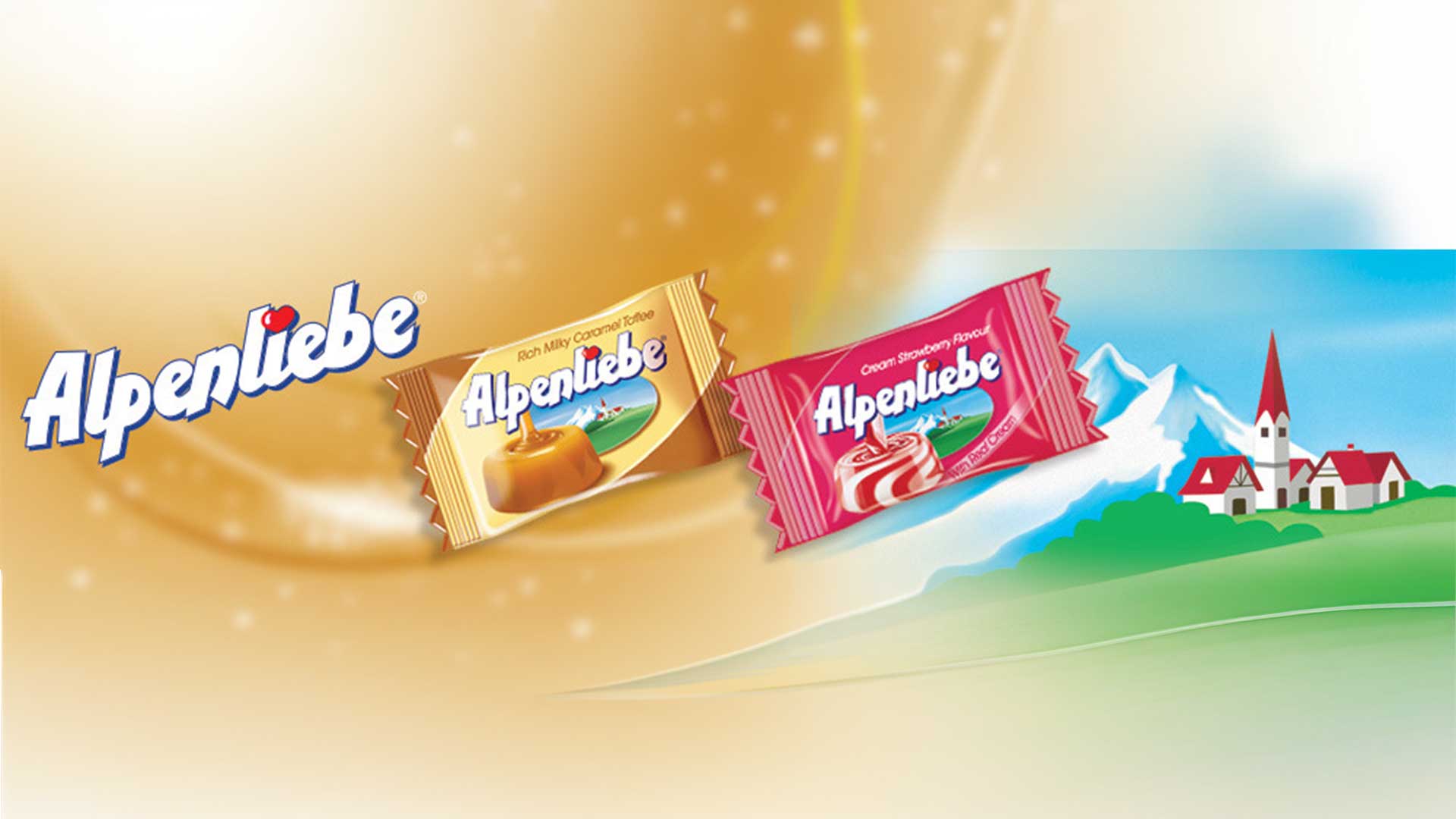
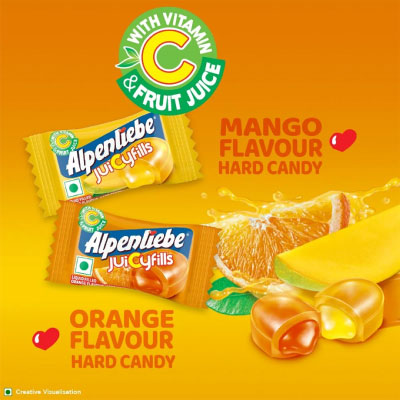
Alpenliebe started as a caramel candy and has kept adding formats under the same name. A cream strawberry flavour came in 2002, the lollipop in 2003, a filled candy range in 2005, Juzt Jelly in 2012 and Alpenliebe Gold in 2015. Each new line borrows the brand's taste promise instead of building a new name from scratch.
- Caramel and cream candies
- Lollipops and filled candies
- Juzt Jelly for the jelly segment
Built for small change
Candy in India sells at the coin level, and Alpenliebe prices for that. Single candies and lollipops sit at low price points for impulse buys, while Alpenliebe Gold was launched at Re 1 with a double-layer swirl. Jars and packs of Juzt Jelly give families and shops a bigger buy. Low unit prices keep trial cheap and repeat easy.
- Low-priced single candies
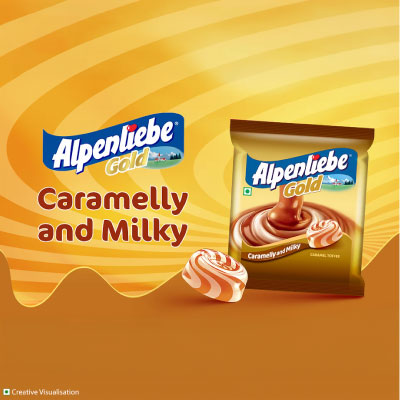
- Alpenliebe Gold launched at Re 1
- Packs and jars for homes and shops
The craving line
Jee Lalchaye Raha Na Jaye has carried the brand for decades. TV ads showed people giving in to temptation, and actor Boman Irani fronted a 2015 relaunch. In 2019 Juzt Jelly moved to social media with #FamilyMeinMastiChali, a recipe contest where celebrity chefs cooked with consumers. The line stayed the same as the media shifted.
- Jee Lalchaye Raha Na Jaye as the anchor
- Celebrity faces such as Boman Irani
- Recipe contests and creator content for Juzt Jelly
Every counter in India
Candy wins at the point of purchase. Perfetti's distribution puts Alpenliebe on kirana counters, paan shops and school canteens across towns and villages, often in jars next to the cash box. Modern trade and online grocery carry larger packs. Reach matters more than media in a category where most purchases are unplanned.
- Kirana and paan shop counters
- Counter jars for visibility
- Modern trade and online grocery for packs
Alpenliebe brand journey
- 1994Perfetti Van Melle enters India with Center Fresh.
- 1995Alpenliebe and Big Babol launch in India.
- 2003Alpenliebe Lollipop joins the range.
- 2012Alpenliebe Juzt Jelly takes the brand into jellies.
- 2015Alpenliebe Gold launches at Re 1 with Boman Irani in a brand relaunch.
- 2019Juzt Jelly runs #FamilyMeinMastiChali, a recipe contest on social media.
- 2020Alpenliebe marks 25 years in India.
Official Alpenliebe channels
Direct verified channels for Alpenliebe.
Challenges & response
Alpenliebe advertising campaigns
Jee Lalchaye Raha Na Jaye
The iconic crocodile campaign with Kajol that established irresistible temptation as Alpenliebe’s permanent core signature.
Alpenliebe Gold Relaunch
Boman Irani as the humorous inspector showcasing the rich caramel indulgence of Alpenliebe Gold.
#FamilyMeinMastiChali (Juzt Jelly)
Positioning Juzt Jelly as a fun ingredient for making home desserts and family bonding moments.
Key learnings from the Alpenliebe case study
A strange name can become an asset if you make it memorable.
One emotional line, held for decades, is worth more than new slogans.
Price impulse products to the coin people carry.
Take an old candy brand to new media with formats people can join.
Frequently asked questions about Alpenliebe
Who owns Alpenliebe?
Alpenliebe is owned by Perfetti Van Melle, the Italian-Dutch confectionery group headquartered in Lainate, Italy. In India it is sold by Perfetti Van Melle India Pvt Ltd, based in Gurugram, which also makes Center Fresh, Big Babol, Mentos and Chupa Chups.
When was Alpenliebe launched in India?
Alpenliebe was launched in India in 1995, a year after Perfetti Van Melle entered the country with Center Fresh. The brand later added a lollipop in 2003, a filled candy range in 2005, Juzt Jelly in 2012 and Alpenliebe Gold in 2015, and marked 25 years in India in 2020.
What is Alpenliebe's tagline?
Alpenliebe's best-known tagline in India is Jee Lalchaye Raha Na Jaye, which roughly means the heart is tempted and cannot resist. The line has anchored its advertising for years and sums up the brand's positioning as a candy that is hard to say no to.
What is Alpenliebe's marketing strategy?
Alpenliebe's marketing strategy combines one long-running craving message with frequent new flavours and formats, low price points for impulse buying and wide counter distribution. In recent years it has added social media work, such as the 2019 Juzt Jelly recipe campaign #FamilyMeinMastiChali with celebrity chefs.
Who are Alpenliebe's competitors?
Alpenliebe competes with DS Group's Pulse, Mondelez's Cadbury Eclairs, Parle's Melody and Mango Bite, and ITC's Candyman range in Indian candies. Most rivals sell at similar low price points through the same kirana counters, so flavour news, visibility and a memorable line decide the sale.
Curated and verified by the Sociapa Research Desk. Brand names, trademarks, and logos belong to their respective owners.