
- ITC launched Aashirvaad atta in 2002, when Annapurna and Pillsbury were already in the market.
- It won with regional wheat blends, a fresh-from-the-chakki promise and ITC's reach into millions of shops.
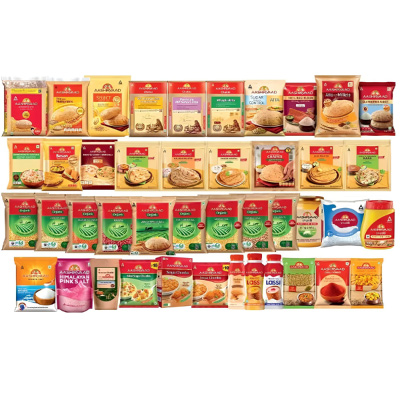
- The brand then stretched into salt, spices, instant mixes and dairy on the back of that trust.
Aashirvaad: origin & market gap
In the early 2000s, most Indian homes bought wheat, washed it and took it to the local chakki to be ground. Packaged atta existed, but only a small share of families used it. ITC, better known for cigarettes and hotels, used its farm links and distribution to enter branded foods, and launched Aashirvaad atta in May 2002. It was a new line of business for a group known mostly for other industries.
Rivals such as HUL's Annapurna and General Mills' Pillsbury were already there. ITC's bet was that taste varies by region. Northern homes eat rotis every day and are fussy about softness, so Aashirvaad built different blends and grain sizes for different markets. The Aashirvaad marketing strategy was to match the chakki, not replace it. Business Standard reported in 2015 that the brand had taken the lead in branded atta within about four years.
Aashirvaad marketing mix (4Ps)
Regional blends of a daily staple
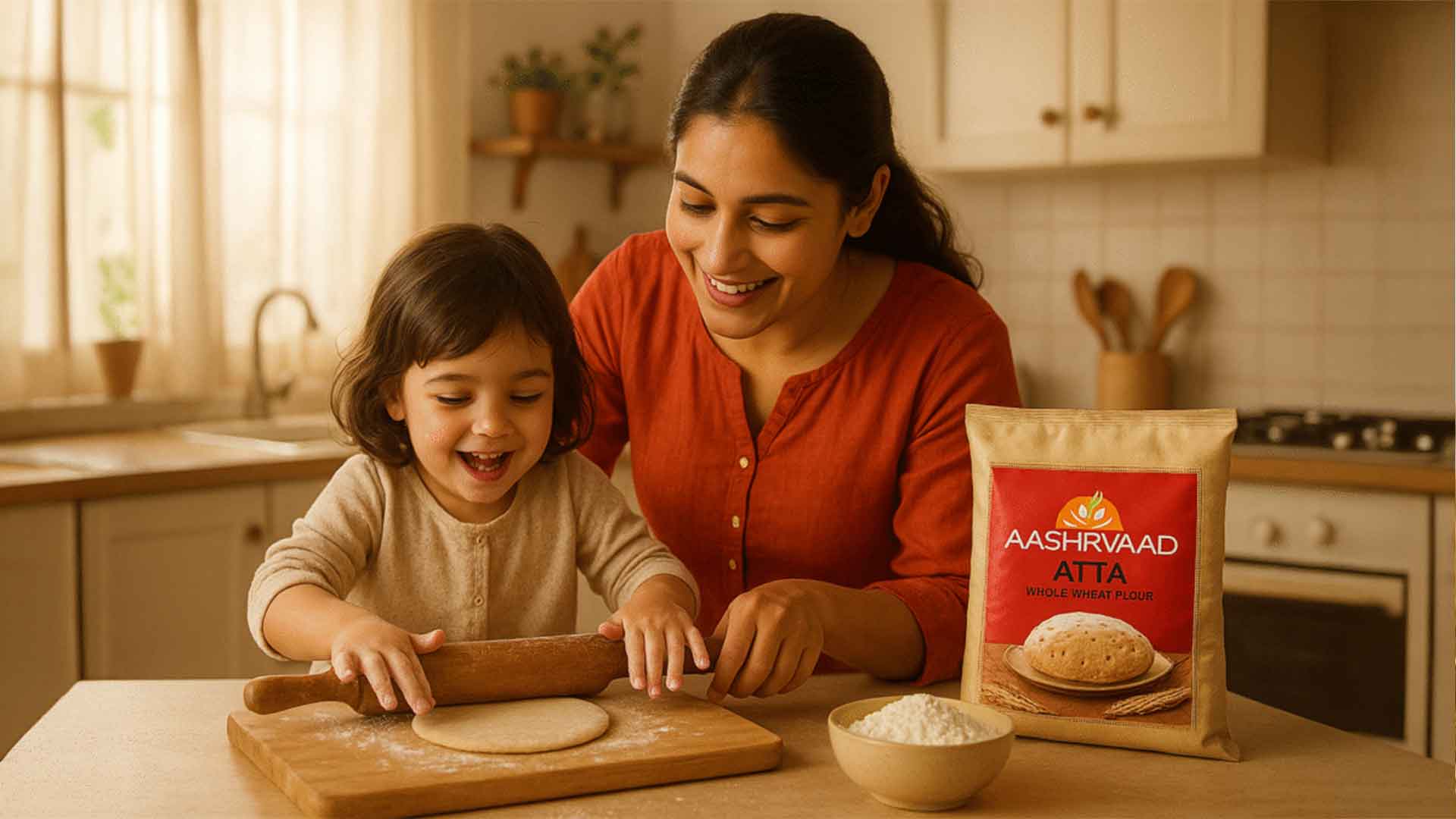
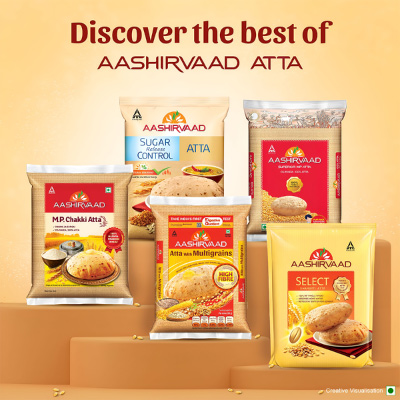
Aashirvaad atta comes in whole wheat, multigrain, sugar-release control and other variants. The core promise is soft rotis and consistent quality, adjusted by region. The brand later extended into salt, spices, instant mixes and dairy under Aashirvaad Svasti. Getting the roti right was the product, so the blends were built region by region.
- Regional wheat blends and granulation
- Multigrain and health variants
- Extensions into salt, spices and dairy
Premium over loose, fair against rivals
Packaged atta costs more than wheat ground at the chakki, so the brand justifies the extra rupees with convenience, hygiene and consistency. Multiple pack sizes let families pick what fits their monthly budget. The brand competes against the chakki, not only against other brands, so value must be felt at home.
- Large family packs for monthly buying
- Smaller packs for trial
- Premium variants for health seekers
Mothers, rotis and health
Advertising centres on the mother who wants her family to eat well. Later work added health, such as the 2020 Happy Tummy for a Happy You campaign for the multigrain variant by McCann Worldgroup, and mom-influencer programmes on social media. Speaking to mothers turns a staple purchase into a family care decision.
- Mother-led family storytelling
- Health claims for variants
- Influencer and digital recipe content
ITC's distribution muscle
Aashirvaad rode on ITC's existing network, which Business Standard described in 2015 as reaching more than two million outlets directly. Farm sourcing links also helped ITC buy the right wheat for each blend. Distribution and sourcing together gave ITC a head start over newer entrants.
- ITC's direct retail reach
- Wholesale coverage in smaller towns
- Farm-linked wheat sourcing
Aashirvaad brand journey
- 2002ITC launches Aashirvaad atta in May, entering branded staples.
- 2003Aashirvaad enters salt.
- 2005Aashirvaad spices are introduced in north India.
- 2015The brand enters dairy with Aashirvaad Svasti ghee.
- 2020McCann Worldgroup's Happy Tummy for a Happy You campaign promotes the multigrain atta.
Official Aashirvaad channels
Direct verified channels for Aashirvaad.

Challenges & response
Aashirvaad advertising campaigns
Happy Tummy for a Happy You
Positioned Aashirvaad multigrain atta as a fibre-rich answer to everyday digestion worries in urban homes.
Key learnings from the Aashirvaad case study
A late entrant can win if it understands the category better.
Regional variation matters in food staples.
Existing distribution is a head start worth using.
Build trust in the core before stretching the brand.
Frequently asked questions about Aashirvaad
Who owns Aashirvaad?
Aashirvaad is owned by ITC Ltd, the Kolkata-headquartered conglomerate. ITC launched Aashirvaad atta in 2002 as its entry into branded staple foods. The brand now covers atta, salt, spices, instant mixes and dairy products under Aashirvaad Svasti. It is one of ITC's largest food brands.
When was Aashirvaad atta launched?
ITC launched Aashirvaad atta in May 2002. At the time, HUL's Annapurna and General Mills' Pillsbury were already selling packaged atta. Aashirvaad took the lead in branded atta within about four years, helped by regional blends and ITC's distribution. The late entry shows that category insight can beat an early start.
What is Aashirvaad's marketing strategy?
Aashirvaad's marketing strategy combines regional product blends, a promise of chakki-fresh quality and ITC's deep distribution. Its advertising speaks to mothers who want soft rotis and healthy meals for their families, with newer campaigns focused on health variants such as multigrain atta.
Who are Aashirvaad's competitors?
Aashirvaad competes with Pillsbury Chakki Fresh, Fortune Chakki Fresh Atta, Annapurna and Patanjali in packaged atta. Its largest competitor is still loose wheat ground at local chakkis, which most Indian households continue to use. The brand's growth depends on converting those households to packs.
Curated and verified by the Sociapa Research Desk. Brand names, trademarks, and logos belong to their respective owners.